Selecting the right bucket tooth bolt determines how well heavy equipment performs under stress. Industry studies show that a high-strength bolt with precise dimensions and advanced alloy steel construction minimizes deformation and meets strict safety standards.
| Performance Metric | Impact on Durability and Safety |
|---|---|
| Maximum Stress on Pin | Reduces risk of fractures and mechanical failure |
| Deformation | Ensures durability and consistent performance |
| Safety Factor | Enhances safety, meets or exceeds standards |
Key Takeaways
- Choose bucket tooth bolts made from high-grade alloy steel with proper heat treatment to ensure maximum strength and long service life.
- Always verify bolt size, thread type, and fit with your equipment to prevent damage, improve safety, and reduce downtime.
- Perform regular inspections and maintenance, including cleaning and timely replacements, to keep bolts durable and your equipment running efficiently.
Essential Qualities of a Bucket Tooth Bolt
High-Grade Steel and Alloy Construction
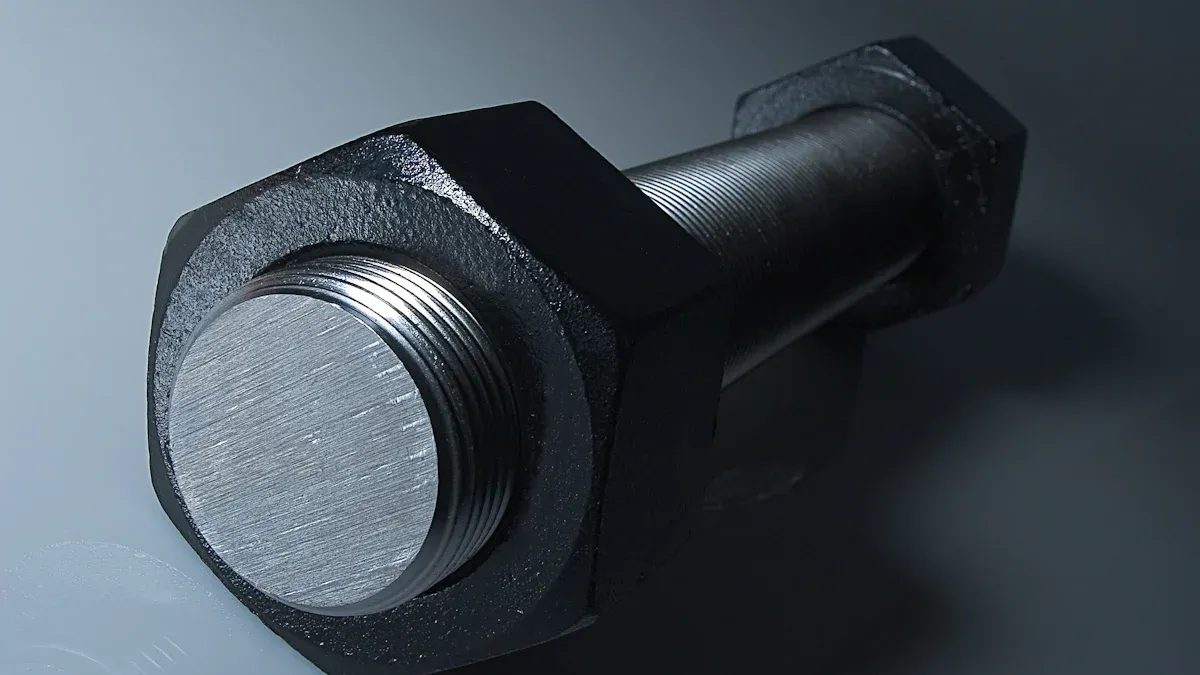
A bucket tooth bolt must use high-grade steel to handle the extreme forces found in construction and mining. Manufacturers often select alloy steels such as AISI 4130 and 4140 for their excellent strength and toughness. These steels contain chromium and molybdenum, which boost corrosion resistance and hardenability. The carbon content, usually between 0.30% and 0.40%, helps the bolt resist bending and breaking under heavy loads.
| Steel Grade / Alloy Type | Alloying Elements | Mechanical Properties | Typical Applications |
|---|---|---|---|
| AISI 4130, 4140 (Alloy Steel) | Chromium (~1%), Molybdenum (~1%), Carbon (0.30-0.40%) | Tensile strength ≥1200 MPa; Surface hardness 58-63 HRC (after induction hardening); High strength, wear resistance, toughness | High-stress parts such as bucket tooth bolts, pins, and walking mechanisms |
| AISI 1045 (Medium Carbon Steel) | Carbon (~0.45%) | Can be hardened; lower cost; moderate strength and hardness | Lower-cost pins and bolts with moderate load requirements |
| Other Alloy Steels (with Cr, Mo, V, Ni) | Chromium, Molybdenum, Vanadium, Nickel | Improved hardness, wear resistance, toughness; Yield strength 105,000 to 130,000 psi; Rockwell hardness up to C65 | Tool steels and high-strength components requiring wear resistance and toughness |
Ningbo Digtech (YH) Machinery Co.,Ltd. uses advanced alloy steels in their bucket tooth bolts to ensure high tensile strength and long service life. This choice of material helps prevent failures that can lead to costly downtime.
Tip: Always check the steel grade and alloy composition before selecting a bucket tooth bolt for your equipment.
Advanced Heat Treatment for Bucket Tooth Bolt Strength
Heat treatment plays a key role in making a bucket tooth bolt strong and reliable. The process involves heating the steel and then cooling it quickly, which changes the structure of the metal. This treatment, known as quenching and tempering, increases both strength and toughness.
- Grade 8 bolts, often used for bucket teeth, reach tensile strengths of about 170,000 psi. Some bolts, like Grade 12.9, can reach up to 190,000 psi.
- The Rockwell hardness for these bolts ranges from C35 to C45, which helps them resist deformation.
- Induction hardening creates a tough outer layer while keeping the core ductile. This balance prevents the bolt from snapping under sudden shocks.
Ningbo Digtech (YH) Machinery Co.,Ltd. applies strict heat treatment standards to every bucket tooth bolt, ensuring each one meets or exceeds industry requirements for heavy-duty use.
Corrosion and Wear Resistance in Bucket Tooth Bolts
A bucket tooth bolt faces harsh environments filled with dirt, water, and chemicals. Corrosion and wear can quickly weaken a bolt if it lacks proper protection. Manufacturers add elements like chromium and molybdenum to the steel to fight rust and abrasion. Some companies also use surface treatments such as Dacromet coating or hot-dip galvanizing. These coatings can protect the bolt for over 1,000 hours in salt spray tests.
- Tungsten carbide parts, when used in wear areas, can extend the service life of bucket teeth and bolts up to ten times longer than standard parts.
- Abrasive materials like concrete and stone can wear down bolts quickly. High wear resistance means less frequent replacements and lower maintenance costs.
- Good Earth Tools and other industry leaders have shown that advanced wear-resistant materials improve both durability and productivity.
Ningbo Digtech (YH) Machinery Co.,Ltd. offers bucket tooth bolts with enhanced corrosion and wear resistance, making them a smart choice for demanding jobs in mining and construction.
Note: Choosing a bolt with high wear and corrosion resistance reduces equipment downtime and boosts overall efficiency.
Bucket Tooth Bolt Fit and Compatibility
Matching Bucket Tooth Bolt Size and Thread Type
Selecting the correct size and thread type for a bucket tooth bolt ensures a secure and reliable connection. When operators mix incompatible thread types, such as NPT and BSPT, the threads do not align properly. This mismatch can strip threads and prevent proper sealing. As a result, the connection becomes weak and prone to leaks or failure. In heavy equipment, improper sizing or thread mismatch can lead to equipment damage and costly downtime. Safety hazards also increase when the bolt does not fit as intended.
Ensuring Proper Fit with Bucket and Tooth Bar
Proper fit between the bolt, bucket, and tooth bar is essential for performance and longevity. Operators should follow these steps to verify the fit:
- Check the initial fit between the bucket and tooth bar, leaving about 1/4 inch of clearance.
- Clamp the tooth bar to the bucket in two directions to eliminate gaps.
- Use a transfer punch to mark the bolt hole centers.
- Pre-drill pilot holes at the marked centers.
- Enlarge the holes to a slip-fit size for the bolts.
- Clean all surfaces before installation.
- Align and tighten the bolts securely.
These steps help prevent damage and ensure the bucket tooth bolt seats correctly.
OEM vs. Aftermarket Bucket Tooth Bolt Options
Compatibility checks are crucial before installing a new bolt. Operators should:
- Verify pin type and retainer size.
- Measure tooth pocket dimensions.
- Confirm adapter design compatibility and inspect for wear.
- Use precision tools to check all dimensions.
- Follow manufacturer guidelines and use high-quality parts.
- Inspect for uniformity and defects.
- Compare measurements with supplier specifications.
- Regularly inspect components for wear.
Choosing between OEM and aftermarket options depends on the equipment’s needs and the quality standards required.
Bucket Tooth Bolt Installation and Maintenance
Ease of Installation and Removal
A well-designed bucket tooth bolt system allows for quick installation and removal. Operators benefit from bolt-together bucket systems, which eliminate the need for welding. These systems use bolts to attach tips and adapters, reducing changeout times from several hours to just one or two. This approach not only saves labor but also minimizes equipment downtime. When bolts fit correctly and use the right thread type, operators can install or remove them with standard tools, making maintenance more efficient.
Maintenance Tips for Bucket Tooth Bolt Longevity
Regular maintenance extends the service life of bucket tooth bolts, especially in harsh environments. Operators should:
- Inspect and clean bolts and ground engaging tools often to spot wear, cracks, or deformation early.
- Apply high-quality lubricants and anti-corrosion coatings to prevent rust and ensure smooth operation.
- Track operating hours and monitor wear patterns to plan timely replacements.
- Follow a preventive maintenance schedule to address minor issues before they become major problems.
- Replace worn or damaged bolts and cutting edges promptly to protect the bucket structure.
These practices help reduce downtime, lower costs, and improve machine availability in demanding field conditions.
Tip: Using bolt-on systems, like those from leading manufacturers, can increase wear life by over 40% compared to traditional weld-on parts.
Avoiding Common Bucket Tooth Bolt Installation Mistakes
Mistakes during installation can lead to equipment failure and safety risks. Operators should avoid these common errors:
- Using incompatible bolts and adapters, which causes misalignment and uneven wear.
- Skipping regular inspections, allowing unnoticed damage to worsen.
- Over-tightening or under-tightening bolts, which can strip threads or cause loosening.
- Failing to align adapters and teeth properly.
Loose or misaligned bolts reduce digging efficiency and increase fuel consumption. Regular inspections every 50-100 operating hours and proper tightening with the right tools help maintain performance and safety.
Real-World Performance of Bucket Tooth Bolts
Field-Tested Durability and Strength
Heavy equipment operators rely on bucket tooth bolts that can handle tough conditions. Field tests show that bolts made from AISI 4140 steel deliver high durability and resist bending during heavy digging. In mining and construction, users report that these bolts maintain their shape and strength even after months of use. The Esco Ultralok system stands out for its advanced locking mechanism, which keeps the teeth secure and reduces the need for frequent replacements. Operators notice less downtime and fewer tooth changes, which improves productivity.
Common Issues with Bucket Tooth Bolts and Solutions
Operators sometimes face problems such as bolts loosening, wearing out quickly, or breaking under stress. These issues often result from using the wrong size or type of bolt, or from improper installation. To solve these problems, experts recommend choosing bolts with a robust locking system and following the manufacturer’s installation guidelines. Regular inspections help catch early signs of wear or misalignment. Applying anti-corrosion coatings and using bolts with advanced heat treatment also extends service life.
Tip: Always match the bolt to the equipment’s specifications and check for proper fit before use.
User Reviews and Recommendations for Bucket Tooth Bolts
User feedback and industry reviews highlight several top-performing products. The Esco Ultralok system receives high marks for durability, safety, and ease of installation. Users appreciate the hammerless design, which speeds up maintenance and reduces injury risk. The Super V teeth offer broad compatibility and lower upfront cost, but they tend to wear faster in harsh conditions. Operators using AISI 4140 and 230SP bucket teeth report improved efficiency and less maintenance. The table below summarizes key features:
| Feature | Esco Ultralok Teeth | Super V Teeth |
|---|---|---|
| Durability | Superior wear life, robust locking system | Good, but wears faster in tough conditions |
| Installation | Hammerless, quick, tool-free | Requires hammer, more time-consuming |
| Safety | High, no hammer needed | Standard, hammer required |
| Maintenance | Less frequent replacements, less downtime | More frequent replacements, higher downtime |
| Cost | Higher upfront cost, long-term savings | Lower initial cost, higher total cost over time |
| Compatibility | Fits most Esco and some OEM buckets | Fits multiple brands, broad compatibility |
Top Factors When Choosing a Bucket Tooth Bolt
Summary of Must-Have Bucket Tooth Bolt Qualities
Industry experts agree that certain qualities define a high-strength bucket tooth bolt. These features help equipment perform well in tough environments and reduce the risk of failure. The five most important qualities include:
- Strength – The bolt must handle high stress and pressure during digging and material movement.
- Durability – It should keep its integrity over time, even with heavy-duty use.
- Wear resistance – The bolt needs to resist constant wear and tear, which prevents loosening.
- Corrosion resistance – Protection from rust and degradation is vital, especially in wet or harsh conditions.
- Secure attachment capability – The bolt must keep the bucket teeth firmly attached, so they do not come loose during operation.
A bucket tooth bolt with these qualities will support safe and efficient work on any job site.
Practical Tips for Selecting the Best Bucket Tooth Bolt
Professionals use several criteria when choosing the right bolt for their equipment. They look at ground conditions first. For loose or sandy soils, curved tooth bars work best. For compacted or tough materials, straight tooth bars offer better performance. The type of job also matters. Heavy-duty digging may require segmented or rock chisel tooth bars, while trenching needs narrow tooth bars.
Equipment compatibility is another key factor. Operators check that the tooth bar fits their loader, backhoe, or excavator by reviewing mounting methods and attachment sizes. Durability stands out as a top priority. Many prefer high-quality materials and bolt-on or replaceable tooth bars for easier maintenance. Versatility also helps. Flexible tooth bars with replaceable teeth or combo designs let workers adapt to different jobs without changing attachments.
Tip: Always match the bolt and tooth bar to the specific equipment and job requirements for the best results.
A strong bucket tooth bolt depends on quality materials, proper fit, and proven field performance. Experts recommend choosing the system that matches equipment needs and maintenance style. Regular checks and timely replacement keep machines safe and efficient. Buyers should always follow safety steps and replace teeth before full wear.
FAQ
What is the best way to check if a bucket tooth bolt fits correctly?
Operators should measure the bolt and compare it to the equipment’s specifications. Proper fit prevents loosening and ensures safe operation.
How often should operators replace bucket tooth bolts?
Most experts recommend inspecting bolts every 50-100 hours of use. Replace any bolt that shows signs of wear, corrosion, or damage.
Can aftermarket bucket tooth bolts match OEM quality?
Some aftermarket bolts meet or exceed OEM standards. Operators should verify material, heat treatment, and fit before choosing aftermarket options.
Post time: Jul-22-2025