How to Secure Hex Bolt and Nut Supply Chain Stability
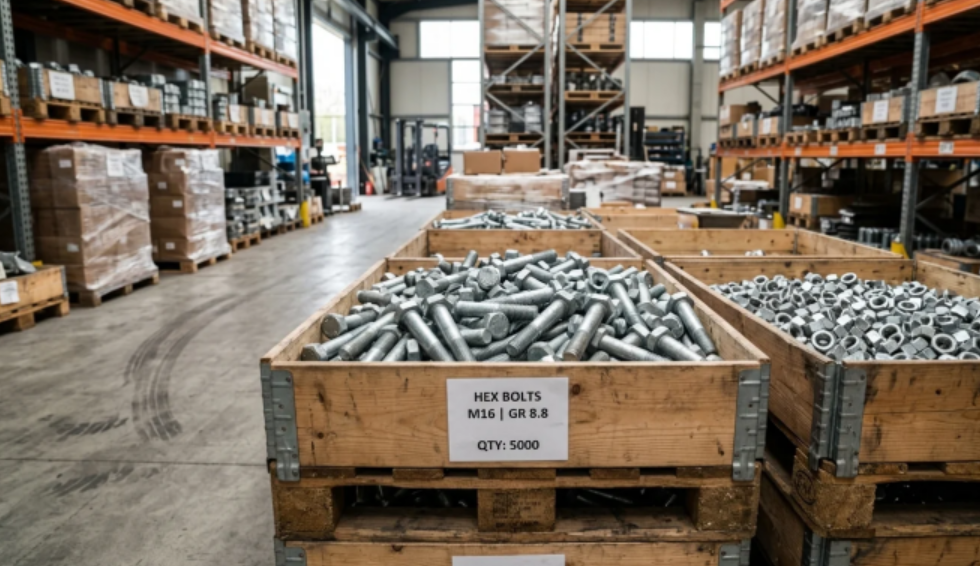
Why Hex Bolt and Nut Supply Stability Matters for B2B Buyers
As someone deeply entrenched in the industrial hardware market, I can tell you that treating fasteners as an afterthought is a massive mistake. The Fastener Supply Chain is the proverbial glue holding together global manufacturing, construction, and heavy machinery sectors. When a B2B buyer faces a sudden stockout of a critical M16 fastener, entire production lines grind to a halt. This isn’t just a minor inconvenience; it’s a catastrophic disruption that burns through capital and destroys client trust.
Supply stability isn’t just about getting parts on time; it’s about predictable pricing, consistent quality, and scalable availability. Over the past few years, we’ve seen fluctuating steel prices and shifting global logistics turn fastener procurement into a high-stakes game. Buyers who lock in reliable factory partners insulate themselves from these market shocks, ensuring they can meet their own customers’ demands without scrambling for spot-market inventory.
At our facilities, we understand this reality intimately. We’ve built our production and supply models around the concept of absolute reliability, ensuring that when you place volume orders, you aren’t left guessing about delivery dates or material integrity.
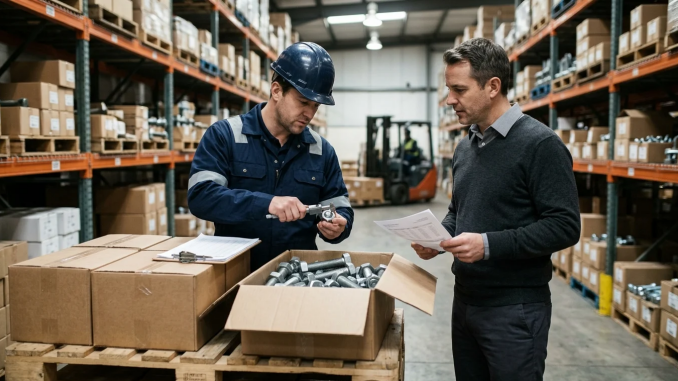
Supply risk impact on delivery, margin, and customer retention
When your supply chain fractures, the immediate impact is delayed delivery, but the secondary effects are far worse. Expediting freight to cover a shortfall destroys your profit margins, turning what should be a lucrative contract into a loss. Furthermore, in the B2B space, your clients rely on your delivery promises to schedule their own labor and production. Fail them once because your supplier missed a shipment, and you risk losing a high-value account to a competitor who had their inventory locked down.
Priority procurement keywords and demand signals
Smart procurement teams use specific demand signals to forecast their needs. We track search trends and RFQ volumes around keywords like “high tensile,” “hot dip galvanized,” and “bulk fasteners” to anticipate market shifts. By analyzing these signals, buyers can stay ahead of seasonal construction spikes or manufacturing booms, adjusting their safety stock before the rest of the market drains supplier capacities.
Using supply stability as a channel advantage
If you are a distributor, your biggest competitive advantage isn’t always having the absolute lowest price—it’s having inventory when no one else does. By partnering with a factory that guarantees supply stability, you transform procurement from a cost center into a sales tool. You can confidently bid on long-term contracts knowing your supplier won’t drop the ball, effectively using your robust supply chain to win market share from less prepared competitors.
Key Hex Bolt and Nut Specifications to Confirm Before Volume Orders
Before you issue a purchase order for a container load of fasteners, you need to have your specifications dialed in flawlessly. A Hex bolt and nut might look simple, but the engineering behind it dictates its performance in the field. A single miscommunicated spec—like ordering a fine thread when a coarse thread was required, or specifying the wrong zinc plating thickness—can result in tons of unusable scrap.
I always advise procurement teams to create rigid specification sheets for every SKU. This eliminates the “guesswork” that sometimes happens when trading companies translate your needs to a factory floor. Precision in your documentation ensures precision in manufacturing.
In our production lines, we verify these specs at multiple stages, from raw wire rod selection to final threading, ensuring that what you put on your PO is exactly what arrives at your warehouse.
Core specs: grade, thread, size, finish, and strength
The foundation of any fastener order relies on five pillars: grade (which dictates material and heat treatment), thread pitch (coarse vs. fine), dimensional size (diameter and length), surface finish (plain, zinc, HDG, PTFE), and ultimate tensile strength. Missing even one of these details can lead to thread stripping or catastrophic shearing under load.
Metric vs imperial and DIN, ISO, ASTM standards
Global trade requires fluency in multiple standards. You must clearly define whether you are working with Metric (e.g., M12x1.75) or Imperial (e.g., 1/2-13) measurements. Furthermore, calling out the exact standard—such as DIN 931 for half-thread bolts, ISO 4014, or ASTM A325 for structural bolts—ensures the head dimensions, thread lengths, and tolerances meet international engineering requirements.
Common product types: stainless, galvanized, carbon steel, and heavy hex
Different environments demand different materials. Stainless Steel Fasteners (like 304 or 316) are non-negotiable for marine or food-grade applications, while hot-dip galvanized (HDG) carbon steel is the go-to for outdoor structural projects. Heavy hex bolts, which feature a larger head across the flats, are specifically requested for high-load industrial and petro-chemical applications where standard hex heads would deform.
How to Evaluate a Hex Bolt and Nut Supplier
Not all suppliers are created equal, and vetting a potential partner goes far beyond comparing unit prices on a spreadsheet. When sourcing globally, you are essentially evaluating a supplier’s ability to act as an extension of your own business. If their machinery breaks down or they fail a raw material audit, it’s your bottom line that suffers.
I recommend conducting deep-dive audits into potential partners. Look for a supplier that doesn’t just promise the world but can back it up with documented processes, modern machinery, and transparent communication.
One of our core company advantages is our hybrid flexibility: we combine the massive output capacity of a primary manufacturer with the agile, customer-centric service typically reserved for high-end boutique distributors.
Capacity, MOQ flexibility, tooling, testing, and export capability
A strong supplier must have the tonnage capacity to handle your peak season orders without balking. However, they should also offer MOQ (Minimum Order Quantity) flexibility for specialized or low-turn SKUs. Ask about their in-house tooling (can they make custom dies quickly?), their laboratory testing equipment (spectrometers, tensile testers), and their track record with international export documentation to ensure smooth customs clearance.
Factory vs trading company vs hybrid sourcing models
Understanding who you are buying from is critical. Here is a quick breakdown of typical sourcing models:
| Sourcing Model | Cost Structure | Communication | Best For |
| Direct Factory | Lowest unit cost | Can be rigid/slow | High volume, standard SKUs |
| Trading Company | Higher (added margin) | Usually excellent | Small mixed orders, consolidation |
| Hybrid Manufacturer | Competitive | Dedicated account reps | Scalable B2B programs, custom specs |
Service strengths: lead times, packaging, communication, and documentation
Even the best bolts are useless if they are delayed at the port because of improper paperwork. Evaluate suppliers on their lead time reliability and their packaging standards (do they use reinforced export cartons and fumigated pallets?). Fast, transparent communication and flawless documentation (commercial invoices, packing lists, MTRs) are hallmarks of a mature, reliable supplier.
Quality Control and Compliance Requirements
In the B2B fastener world, quality control is a matter of safety and liability. If a Grade 10.9 bolt fails on a bridge or a piece of heavy machinery, the financial and legal repercussions are staggering. You cannot rely on visual inspections alone; you need documented, scientific proof that the metallurgical properties of your order match your specifications.
I always push buyers to demand transparency in the QA process. A supplier should be proud to share their testing protocols, not hide them behind vague assurances.
At our manufacturing plant, we integrate automated optical sorting machines alongside rigorous manual metallurgical testing. This dual-layered approach ensures that our defect rate remains exceptionally low, giving our buyers total peace of mind.
Required certifications, test reports, and traceability records
Always require an MTR (Material Test Report) or a 3.1 certification per EN 10204. These documents prove the chemical composition and mechanical properties of the steel heat lot used for your specific batch. Traceability is vital; if a defect is found in the field, you must be able to trace that single bolt back to the exact day it was forged and the specific coil of wire it was made from.
Incoming inspection checklist for bulk shipments
When a container arrives, your warehouse team should have a strict incoming inspection checklist. This should include verifying carton weights, checking label accuracy, performing go/no-go ring gauge tests for thread tolerance, and conducting a visual check for plating consistency. Catching an issue before the product hits your distribution shelves saves massive headaches later.
Risk comparison by grade, coating, application, and QA level
The level of QA required scales with the risk of the application.
| Bolt Grade | Typical Coating | Application Risk | Required QA Level |
| Grade 4.8 | Zinc Plated | Low (Light assembly) | Standard visual & dimensional |
| Grade 8.8 | Hot Dip Galv | Medium (Construction) | Tensile testing, coating thickness |
| Grade 10.9 | Geomet/Plain | High (Heavy machinery) | Full metallurgical, yield strength, MTR |
Managing MOQ, Packaging, and Inventory
Balancing inventory costs against the risk of stockouts is the eternal struggle of the procurement professional. When importing Wholesale Bolts, you are dealing with heavy, dense freight. Over-ordering ties up your working capital and warehouse space, while under-ordering forces you to pay exorbitant air freight fees to keep customers happy.
Strategic buyers don’t just look at the piece price; they calculate the Total Cost of Ownership (TCO), which includes holding costs, warehouse footprint, and handling labor.
We work closely with our B2B partners to optimize this balance. By offering staggered shipping schedules and intelligent packaging solutions, we help our clients maintain lean inventories without exposing them to supply shocks.
How MOQ, safety stock, and forecasting affect cost and service
High MOQs drive down the unit price but increase your holding costs. Accurate forecasting—using historical sales data combined with upcoming contract wins—allows you to set realistic safety stock levels. If your safety stock is too low, a two-week shipping delay can cause a stockout; if it’s too high, your cash is trapped in steel.
Packaging standards that reduce loss and claims
Fasteners are heavy and unforgiving on packaging. Standard export packaging usually consists of 25kg (or 50lb) double-corrugated cartons stacked on heat-treated wooden pallets, shrink-wrapped, and steel-banded. Poor packaging leads to burst boxes, mixed lots, and rusted parts from sea air exposure. Insist on strict packaging guidelines in your PO to eliminate transit losses.
Reorder points and buffer stock for high-turn SKUs
For high-turn items like standard M10 or M12 hex bolts, you need automated reorder points. Calculate your reorder point by multiplying your average daily usage by the supplier’s lead time (including transit), then adding your buffer stock. This mathematical approach removes emotion from purchasing and ensures a steady pipeline of inbound freight.
Logistics and Trade Terms That Affect Supply Performance
Moving Bulk Hex Bolts across the globe is a logistics challenge heavily dictated by weight rather than volume. Fasteners “weigh out” before they “cube out.” A standard 20-foot container will hit its maximum legal weight limit (typically around 24 to 28 metric tons, depending on the routing) long before it is physically full.
Understanding the nuances of maritime freight, customs, and Incoterms is essential for keeping your landed costs predictable. A great FOB price means nothing if your freight forwarder gouges you on destination charges or if customs holds your goods due to improper classification.
Our export logistics team handles thousands of tons of fasteners annually. We provide optimized container loading plans to ensure you aren’t paying to ship empty space, maximizing the value of every ocean freight dollar.
FCL vs LCL, ocean vs air, and transit planning
Always aim for FCL (Full Container Load) when shipping fasteners, as LCL (Less than Container Load) exposes heavy pallets to damage from other cargo and incurs higher handling fees per ton. Ocean freight is the standard, but you must plan for 30-45 day transit times. Air freight should be reserved strictly for emergencies, as the cost per kilo for steel bolts is astronomically high.
Incoterms, customs classification, tariffs, and compliance
Choose your Incoterms wisely; FOB (Free On Board) gives you control over the ocean freight, while CIF (Cost, Insurance, and Freight) puts the shipping burden on the supplier. Ensure your commercial invoices use the correct HS Codes (e.g., 7318.15 for threaded bolts) to avoid customs delays and ensure you are paying the correct tariff rates, which vary wildly depending on the country of origin and current trade agreements.
Shipment scheduling, document checks, and delay response
Proactive shipment scheduling requires constant communication. Require your supplier to send draft shipping documents (Bill of Lading, Commercial Invoice, Packing List) for your approval before the vessel sails. If a delay occurs due to port congestion or rolled cargo, having advance notice allows you to implement contingency plans, like pulling from buffer stock or expediting a smaller LCL shipment.
Procurement Strategies for Supply Continuity
To truly secure your supply chain, you must move away from transactional, order-by-order purchasing and embrace strategic procurement. The market is too volatile to rely on spot buys. You need frameworks that guarantee capacity allocation from your manufacturing partners, even when global demand spikes.
I’ve seen buyers transform their operations by establishing deep, integrated relationships with their suppliers. This shifts the dynamic from an adversarial “buyer vs. seller” negotiation to a collaborative partnership aimed at mutual growth.
We actively encourage long-term agreements with our clients. By sharing forecasts and committing to annual volumes, we can pre-purchase raw steel wire at favorable rates, passing those savings and guaranteed lead times back to the buyer.
Annual contracts, dual sourcing, blanket POs, and VMI
Annual contracts lock in pricing mechanisms (often tied to a raw material index) and guarantee factory capacity. Blanket POs allow you to commit to a large volume but take delivery in staggered releases, improving your cash flow. For critical SKUs, implement dual sourcing—split your volume 80/20 between a primary and secondary supplier to mitigate regional risks. Vendor Managed Inventory (VMI) takes this a step further, where the supplier monitors your stock and replenishes it automatically.
Balancing price with allocation, quality, and supplier cooperation
Chasing the absolute lowest penny per piece often leads to poor allocation priority when the factory gets busy. A strategic buyer balances a competitive price with the guarantee of prioritized production, unwavering quality, and a cooperative supplier willing to rush an order when an emergency arises.
Supplier selection framework for lead time, compliance, MOQ, and margin
Develop a weighted scorecard for evaluating suppliers. Assign points for historical lead-time adherence, strict ISO compliance, flexible MOQs, and the overall impact on your landed profit margin. A supplier scoring high in reliability and compliance is almost always a better long-term bet than one who only scores high on low pricing.
Final Buyer Checklist and FAQs
Securing your fastener supply chain is an ongoing process of refinement and relationship management. By standardizing your specs, auditing your suppliers, and mastering the logistics of heavy freight, you can turn procurement into a strategic asset.
To wrap up, I’ve compiled a quick checklist and FAQ section based on the most common questions I receive from procurement directors and wholesale importers. Keep these principles in mind, and you’ll navigate the complexities of global fastener sourcing with confidence.
Key takeaways for stable sourcing
Always prioritize transparency, rigorous QA documentation, and strategic logistics planning. Treat your factory as a partner, utilize blanket POs to secure capacity, and never compromise on metallurgical testing for high-risk applications.
How many suppliers to qualify for core SKUs
For your highest-volume “A-class” SKUs, you should qualify at least two reliable suppliers (an 80/20 or 70/30 volume split is ideal). For specialized or low-volume “C-class” items, a single highly flexible hybrid manufacturer is usually sufficient to manage the complexity.
What MOQ is reasonable and how to negotiate it
Reasonable MOQs typically range from 500kg to 1,000kg per size for standard carbon steel bolts. To negotiate lower MOQs, offer to combine multiple sizes of the same grade and finish into a single production run, or commit to a blanket PO where the factory produces the full MOQ but ships it to you over several months.
Which documents to require before shipment
Before releasing final payment or authorizing shipment, demand a draft Bill of Lading, a detailed Packing List (with net/gross weights per pallet), a Commercial Invoice with correct HS codes, and the Material Test Reports (MTRs) corresponding to the heat numbers of your specific batch.
Related reading: Hex bolt and nut
Key Takeaways
- Wholesale sourcing and supply-chain implications for Hex bolt and nut
- Specifications, compliance, and commercial terms buyers should validate
- Actionable recommendations for distributors and procurement teams
Post time: Apr-14-2026