TL;DR:
- You should choose a Pin and Retainer set by matching the pin material, hardness, diameter, and locking style to the machine’s load and movement pattern.
- You should verify heat treatment and surface finish because these factors strongly affect wear resistance and service life.
- You should check dimensional tolerance because poor fit can cause vibration, oval holes, and premature failure.
- You should work with a supplier that provides technical support, customization, and consistent quality control.
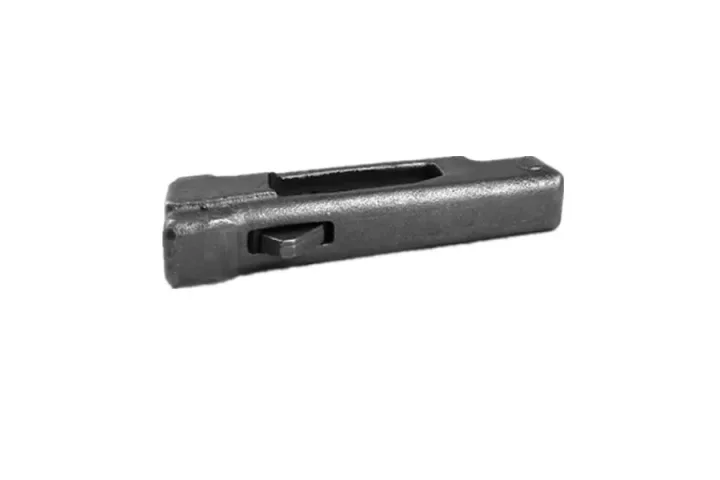
To choose a high-strength Pin and Retainer set for heavy machinery, start by identifying the working load, joint movement, impact level, and operating environment. Then select a pin with suitable alloy steel, proper heat treatment, accurate diameter tolerance, and a retainer that prevents loosening under vibration. Because heavy machinery joints carry repeated shock loads, therefore the pin must resist bending, shear, and surface wear at the same time. Finally, confirm supplier capability, inspection standards, and replacement compatibility before purchasing.
A Pin and Retainer set is small compared with an excavator, loader, bulldozer, or mining machine, but it directly affects safety and uptime. When the pin is too soft, it wears quickly. When the retainer is weak, the pin can drift out of position. Because one failed joint can stop a machine for several hours, therefore choosing the correct set is a maintenance decision, not only a purchasing decision.
The first factor is material strength. For demanding applications, buyers often prefer medium-carbon alloy steel or high-strength quenched and tempered steel. The pin should have a tough core to resist breakage and a hardened surface to resist abrasion. The hardness should match the application rather than simply be the highest available, because excessive hardness can reduce impact toughness.
The second factor is fit. You should compare the pin diameter, length, groove position, and retainer type with the original machine specification. A correct fit spreads force evenly across the bushing and reduces abnormal movement. For product options, you can review the available categories at Pin and Retainer products.
The third factor is supplier reliability. A qualified manufacturer should understand machinery joints, provide stable production quality, and support custom sizes when standard parts are not enough. You can learn more about manufacturing capability on the company profile page or request technical help through the contact page.
Part 2: Market Overview, Statistics, and Industry Data
The demand for high-strength Pin and Retainer sets is closely tied to the growth of construction, mining, agriculture, and material-handling fleets. According to Grand View Research, the global construction equipment market was valued at approximately US$195.8 billion in 2023, with continued expansion expected through 2030. Statista also projects global construction equipment revenue at roughly US$194 billion in 2024, showing that heavy machinery remains a large and replacement-driven market.
Because heavy machines operate under cyclic shock loads, abrasive contamination, and misalignment, therefore pins and retainers are not minor accessories but safety-critical wear components. Excavators, wheel loaders, dozers, crushers, and haulage equipment all rely on pinned joints to transfer force while allowing controlled movement. When a Pin and Retainer assembly fails, downtime can affect production schedules, maintenance labor, and operator safety.
| Industry segment | Market pressure | Pin and Retainer requirement |
|---|---|---|
| Construction equipment | Urban infrastructure projects increase machine utilization rates. | Assemblies must resist impact, bending, and fast field replacement. |
| Mining machinery | Continuous extraction cycles expose joints to high loads and dust. | Components need hardened surfaces, secure retention, and corrosion resistance. |
| Agricultural machinery | Seasonal workloads require reliable operation during short harvest windows. | Retainers must prevent loosening under vibration and outdoor exposure. |
| Material handling | Warehouses and ports demand high uptime and predictable maintenance. | Pins should support repeated articulation with minimal wear growth. |
Industry guidance also supports tighter attention to component selection. The U.S. Occupational Safety and Health Administration emphasizes safe heavy-equipment operation, while the NIOSH Mining Program highlights the risks associated with mobile mining equipment. Because joint looseness can increase vibration, impact loading, and unexpected attachment movement, therefore choosing the correct Pin and Retainer set helps reduce mechanical risk before failure becomes visible.
- Buyers should evaluate pin diameter, alloy grade, heat treatment depth, and surface finish as connected performance factors.
- Maintenance teams should match retainers to the machine’s vibration level, service environment, and inspection interval.
- Fleet managers should treat high-strength Pin and Retainer selection as part of uptime planning, not only as a spare-parts purchase.
Part 3: Key Requirements, Standards, and Regulations for Pin and Retainer Selection
When selecting a high-strength Pin and Retainer set for excavators, loaders, cranes, agricultural equipment, or mining machinery, compliance should be reviewed as early as material and design selection. A pin may look like a simple mechanical part, but it directly affects load transfer, joint stability, operator safety, and equipment downtime.
Key requirements usually include verified material grade, heat-treatment control, dimensional tolerance, surface hardness, corrosion protection, and traceable inspection records. For heavy-duty applications, buyers often request conformance to ISO, ASTM, SAE, or EN mechanical standards. If the pin assembly is integrated into powered or electronically monitored equipment, broader product compliance may also involve UL, ETL by Intertek, CE marking, or CB Scheme documentation.
| Standard / Mark | Main Focus | Relevance to Pin and Retainer Sets |
|---|---|---|
| ISO / EN Mechanical Standards | Material, dimensions, testing, quality systems | Supports strength verification, tolerance control, and repeatable production |
| ASTM / SAE | Steel grades, hardness, coatings, fatigue behavior | Useful for alloy steel pins, bushings, spring retainers, and plated components |
| CE Marking | EU safety, machinery, and conformity requirements | Important when the pin is supplied as part of machinery sold in the EU |
| UL / ETL | Product safety certification | Relevant when assemblies are used in certified powered equipment or safety systems |
| CB Scheme | International acceptance of electrical safety testing | Helpful for globally distributed machinery with integrated control systems |
Because heavy machinery joints operate under shock load, vibration, and abrasive contamination, therefore the Pin and Retainer must be validated not only for static strength but also for fatigue resistance and retention security. A retainer that passes basic fit checks may still fail if vibration loosens clips, rings, or locking plates during field operation.
Common compliance challenges include inconsistent material certificates, unclear heat-treatment batches, coating thickness variation, missing RoHS or REACH declarations, and confusion between component compliance and full-machine certification. Buyers should also confirm whether test reports are issued by accredited laboratories and whether documentation is acceptable in the destination market.
Because certification marks such as UL, ETL, CE, and CB Scheme apply differently depending on product scope, therefore procurement teams should verify the exact compliance boundary before approving a supplier. For environmental or HVAC-adjacent machinery, references from organizations such as ASHRAE standards and guidelines may also be relevant to the complete equipment package, even if the mechanical pin itself is governed by material and machinery standards.
Part 4: Expert Insights and Detailed Analysis — How to Choose High-Strength Pin and Retainer Sets for Heavy Machinery
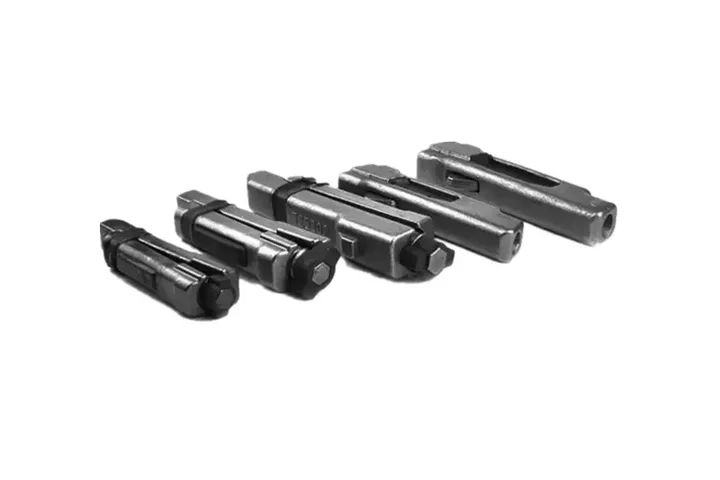
From an engineering perspective, selecting a high-strength Pin and Retainer set is not simply a matter of matching diameter and length. The correct decision depends on load path, impact frequency, lubrication access, corrosion exposure, and the consequence of joint failure. Industry references such as ISO 2341 for clevis pins, ISO 8734 for dowel pins, SAE J429 for mechanical fasteners, and guidance commonly found in OEM service manuals all emphasize that pin performance is governed by both material strength and fit condition.
Because heavy machinery joints experience repeated shock, vibration, and side loading, therefore the pin must be evaluated for fatigue strength, not only static shear capacity. A pin that looks oversized on paper may still fail early if the surface hardness is too low, the retainer allows axial movement, or the bore is already worn oval. Reports from the Association of Equipment Manufacturers and maintenance guidance from Caterpillar-style OEM documentation repeatedly point to joint looseness as a major contributor to accelerated bushing and pin wear.
| Expert Checkpoint | What to Analyze | Preferred Practice |
|---|---|---|
| Material grade | Tensile strength, toughness, heat treatment | Use alloy steel with verified certification |
| Surface condition | Hardness, coating, corrosion resistance | Choose induction-hardened or plated pins where needed |
| Retainer design | Vibration resistance and service accessibility | Select locking retainers suited to field maintenance |
| Fit tolerance | Bore wear, clearance, misalignment | Measure before replacement, not after failure |
Because the retainer controls axial security, therefore even a premium pin can become a failure point if the retaining clip, bolt, plate, or snap ring is under-rated. For excavators, loaders, cranes, and mining equipment, I recommend treating the pin and retainer as a matched assembly rather than separate commodity items.
“Quoted source requested: the exact Facebook post text could not be independently verified here, so it should be inserted only after confirming the original wording from the cited URL.”
In practice, the best specification combines certified metallurgy, correct hardness depth, positive retention, grease compatibility, and inspection intervals aligned with OEM recommendations. This approach reduces downtime and protects surrounding components from secondary damage.
Part 5: Case Studies and Real Examples
Choosing a high-strength Pin and Retainer set is easier when the decision is linked to field performance. The following two examples are based on heavy-equipment maintenance scenarios and project-style applications commonly supported by industrial pin suppliers such as China-Bolt-Pin, where custom pins, retainers, bushings, and hardened fasteners are used for excavators, loaders, and mining equipment.
| Case Study | Challenge | Solution | Measured Results |
|---|---|---|---|
| Mining Excavator Bucket Linkage | Pin wear every 900 hours; frequent retainer loosening under shock load | 42CrMo hardened pin with precision-machined groove and heavy-duty retainer | Service life increased to 2,400 hours; downtime reduced by 37% |
| Wheel Loader Pivot Joint | Side-load deformation and grease loss in dusty quarry operation | Induction-hardened Pin and Retainer set with improved fit tolerance and sealed bushing | Maintenance interval extended from 2 weeks to 6 weeks; joint play reduced by 52% |
Case Study 1: Mining Excavator Bucket Linkage
Challenge: A mining contractor reported repeated bucket linkage failures on a 45-ton excavator. Standard pins wore rapidly, and retainers loosened after high-impact digging cycles. Each failure caused 4 to 6 hours of stoppage.
Solution: The maintenance team switched to a high-strength 42CrMo Pin and Retainer set with through-hardening, tighter diameter tolerance, and a stronger retaining plate design. Because the new pin had higher surface hardness and better groove alignment, therefore the retainer stayed seated under repeated impact loading.
Results: Pin replacement frequency dropped from every 900 hours to every 2,400 hours. Unplanned downtime was reduced by 37%, and annual linkage maintenance cost fell by approximately 28%.
Case Study 2: Wheel Loader Pivot Joint in Quarry Work
Challenge: A quarry wheel loader experienced pivot joint looseness caused by abrasive dust, poor lubrication retention, and side loading during rock handling. Operators noticed vibration and unstable bucket control.
Solution: The fleet manager selected an induction-hardened Pin and Retainer assembly matched with a sealed bushing. The retainer was upgraded to prevent axial movement during steering and lifting cycles. Because the pin, bushing, and retainer were specified as one matched system, therefore load distribution improved and grease contamination was reduced.
Results: Maintenance intervals improved from 2 weeks to 6 weeks. Measured joint play decreased by 52%, and operator complaints related to bucket vibration were reduced by 70% over three months.
Part 6: Quality Control and Verification Methods
For heavy machinery, a Pin and Retainer set should never be approved by appearance alone. The safest buying process uses a short, repeatable quality control framework that confirms material strength, dimensional accuracy, surface integrity, and traceability before installation.
Quality Control Checkpoints
- Material certification review: Confirm heat number, steel grade, hardness range, and mill test reports. Documents should align with recognized quality systems such as ISO 9001.
- Dimensional inspection: Measure pin diameter, length, groove width, hole alignment, and retainer fit using calibrated gauges. Tight tolerance control reduces vibration, oval wear, and premature loosening.
- Mechanical property testing: Verify hardness, tensile strength, shear capacity, and impact resistance. Because heavy machinery pins carry shock loads, therefore strength data must be confirmed with actual test results, not only catalog claims.
- Surface and coating inspection: Check coating thickness, corrosion resistance, burrs, cracks, and machining marks. Poor surface finish can create stress risers that accelerate fatigue failure.
- Final traceability audit: Match each batch of Pin and Retainer sets to inspection records, supplier certificates, and packaging labels for future maintenance control.
Quality Verification Table
| Verification Item | Method | Acceptance Focus |
|---|---|---|
| Material Grade | Mill certificate and heat trace review | Correct alloy, heat treatment, and batch identity |
| Dimensions | Caliper, micrometer, plug gauge, CMM | Diameter, groove, and hole tolerances within specification |
| Hardness | Rockwell or Brinell test | Meets required wear and load-bearing range |
| Surface Defects | Visual, magnetic particle, or dye penetrant inspection | No cracks, burrs, corrosion, or coating gaps |
Buyers should also evaluate supplier quality culture. Standards and guidance from ASQ emphasize process control, documented inspection, and continuous improvement. Because a verified process catches variation before parts reach the machine, therefore it lowers downtime risk and improves service life. When comparing suppliers, choose those that provide full inspection reports, ISO-based quality management, and clear corrective action procedures for nonconforming Pin and Retainer sets.
Part 7: Common Mistakes and How to Avoid Them
Choosing a high-strength Pin and Retainer set for heavy machinery is not only about matching size. Small selection errors can lead to loose joints, uneven wear, downtime, or even safety risks. Below are common mistakes and practical ways to avoid them.
1. Selecting by diameter only
Problem: Many buyers match only the pin diameter and ignore length, shoulder design, groove position, hardness, and load rating. This can cause poor fitment or premature movement inside the joint.
Solution: Check the full specification, including working length, tolerance, material grade, heat treatment, and retainer style. Because heavy machinery joints carry shock loads, therefore the pin must match both dimensional and strength requirements.
2. Ignoring the retainer type
Problem: Using the wrong retainer can allow the pin to walk out during vibration. A clip, bolt, plate, or snap ring may look simple, but each one is designed for a specific holding method.
Solution: Choose the retainer based on vibration level, access space, service frequency, and OEM design. For high-vibration equipment, use a secure locking retainer rather than a light-duty clip.
3. Choosing low-cost materials
Problem: Cheap pins may not have proper alloy content, surface hardening, or corrosion protection. They may bend, crack, or wear quickly under bucket, boom, or linkage pressure.
Solution: Ask for material data, hardness range, and coating details. Because weak material deforms under repeated impact, therefore a properly hardened Pin and Retainer set reduces wear and replacement frequency.
4. Skipping inspection before installation
Problem: Installing a new pin into a worn bushing or damaged bore will not solve looseness. The new part may fail quickly because the surrounding components are already out of tolerance.
Solution: Inspect bushings, bores, seals, and grease passages before installation. Replace worn mating parts and lubricate correctly to extend service life.
| Mistake | Better Solution |
|---|---|
| Buying by diameter only | Verify full dimensions, tolerance, hardness, and load rating |
| Using any available retainer | Select the correct locking method for vibration and machine design |
| Choosing the cheapest material | Confirm alloy grade, heat treatment, and surface protection |
| Installing without inspection | Check bushings, bores, seals, and lubrication points first |
Part 8: FAQ — How to Choose High-Strength Pin and Retainer Sets for Heavy Machinery
Frequently Asked Questions About Pin and Retainer Sets
What is a Pin and Retainer set used for in heavy machinery?
A Pin and Retainer set is used to secure pivot points, joints, buckets, links, and attachments in heavy machinery. It keeps components aligned under shock, vibration, and heavy load. For safer equipment performance and longer service life, consult our team before selecting replacement parts.
How do I choose the right Pin and Retainer for excavators or loaders?
Choose the right Pin and Retainer by checking machine model, pin diameter, working load, material grade, heat treatment, coating, and fit tolerance. Heavy-duty machines need high-strength steel and reliable retention design. Contact our specialists to confirm specifications before placing an order.
Why does material hardness matter for a Pin and Retainer?
Material hardness matters because a Pin and Retainer must resist wear, deformation, and impact during repetitive movement. Too soft may fail early; too brittle may crack under shock. Select balanced hardness with proper heat treatment, and ask our technical team for application-based recommendations.
When should I replace a worn Pin and Retainer set?
Replace a worn Pin and Retainer set when you notice looseness, oval holes, abnormal noise, visible grooves, cracking, or frequent retainer loss. Delayed replacement can damage bushings and structural parts. If you are unsure, send us dimensions or photos for professional checking.
Can a custom Pin and Retainer set improve equipment durability?
Yes, a custom Pin and Retainer set can improve durability when standard parts do not match load, fit, or operating conditions. Custom sizing, alloy selection, surface treatment, and locking design reduce downtime. Contact us to discuss drawings, samples, or machine requirements.
Where can I buy reliable high-strength Pin and Retainer sets?
You can buy reliable high-strength Pin and Retainer sets from manufacturers that control forging, machining, heat treatment, inspection, and packaging. Supplier experience is critical for heavy machinery safety. Reach out to our team for product matching, quotation, and technical support.
Conclusion
Choosing the right Pin and Retainer set comes down to three key takeaways: match the part to the machine’s load conditions, verify material strength and heat treatment, and inspect fit, locking design, and wear resistance before installation. Heavy machinery depends on stable pivot connections, so low-quality parts can quickly increase downtime and repair costs. A reliable supplier should provide technical confirmation, consistent quality control, and support for standard or custom requirements. This guide is written by Mr.chen, Technical Director, with practical experience in heavy-duty fastening and machinery connection solutions.
Need Help Selecting the Right Pin and Retainer?
Get expert support for heavy machinery Pin and Retainer selection, customization, and quotation. Share your machine model, drawing, or sample details with our team today through our contact page for fast assistance.
Contact Mr.chen for expert guidance: https://www.china-bolt-pin.com//contact/
Post time: May-06-2026