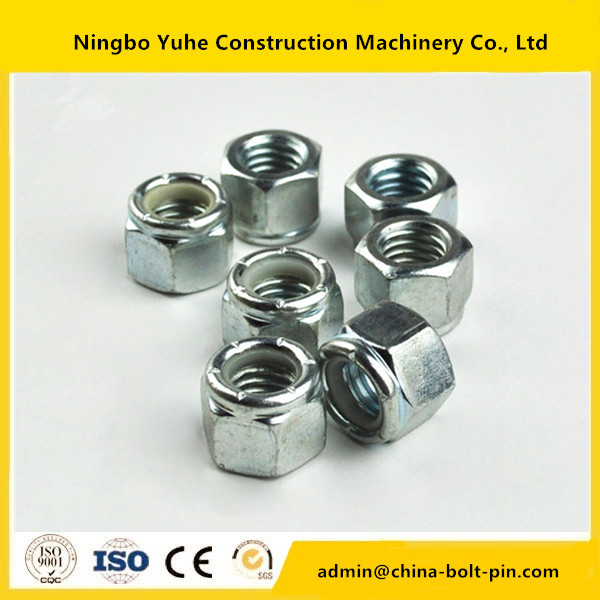
TL;DR. Choosing a custom track bolt manufacturer in China requires a 7-point audit checklist that goes beyond the standard ISO 9001 paper review. The 7 items cover: (1) heat treatment line capability (furnace type, calibration, capacity), (2) HRC sampling and AQL sampling plan (with ±2 HRC tolerance band), (3) part number library and tooling inventory (covering Komatsu, Hitachi, Hyundai, Caterpillar, Kobelco, Daewoo, and Sumitomo part numbers), (4) forging vs machining capability decision tree, (5) thread rolling vs thread cutting capability, (6) documentation trail and compliance (5 document types), and (7) capacity and lead time stability. A comprehensive audit takes 2 to 3 days on site or 4 to 6 hours by video, with a typical cost of $1,500 to $5,000. For buyers looking for a full undercarriage fastener range, see the example OEM excavator bolt and nut for reference, and watch our forging line in action to evaluate the production capability directly.
Why Custom Track Bolt Sourcing Needs a Different Playbook
Custom track bolt sourcing is fundamentally different from generic fastener sourcing because of the unique combination of mechanical performance, dimensional precision, and OEM-specific compliance that the buyer requires. A standard hex bolt purchased from a hardware store must simply meet its size and grade; a custom track bolt for a Komatsu PC200 excavator must match the OEM part number (including thread pitch, length tolerance, head marking, and surface finish), must meet the OEM-specified property class (typically 10.9 or 12.9 grade per ISO 898-1), and must come with material and heat treatment certificates traceable to the steel mill and the heat treatment batch. Five structural differences separate custom track bolt sourcing from generic fastener sourcing.
Difference 1: Mechanical property consistency. Custom track bolts require consistent mechanical properties across the entire lot because the bolts are critical to the structural integrity of the undercarriage system. A single under-strength bolt can cause track failure, machine downtime, and safety incidents. The factory must demonstrate process capability (Cpk) of at least 1.33 for the critical mechanical properties (tensile strength, hardness, decarburization). Generic fasteners have much wider property tolerances because the consequence of failure is lower.
Difference 2: Heat treatment stability. Custom track bolts rely on the heat treatment process to achieve the required hardness and strength. The heat treatment line must have calibrated furnaces (typically 3 to 5 furnaces for a medium-size factory), controlled quenching media (oil temperature 40-80 °C), and continuous temperature recording. Generic fasteners often skip heat treatment or use lower-cost processes that do not meet the property class requirements.
Difference 3: Dimensional consistency with OEM specs. Custom track bolts must match the OEM drawing within tight tolerances, typically ±0.05 mm on critical dimensions (thread pitch diameter, head height, under-head bearing surface) and ±0.1 mm on non-critical dimensions. Generic fasteners use standard tolerances per DIN or ISO standards, which may be wider than the OEM requirement.
Difference 4: Packaging and logistics for heavy items. Custom track bolts are heavy (typically 0.5 to 5 kg per bolt) and often shipped in 20-foot or 40-foot container loads. The factory must have experience in heavy-bolt packaging (wooden crates, pallet wrapping, container loading optimization) and must be able to handle the export logistics including customs declaration, fumigation if wooden packaging is used (per ISPM 15), and freight forwarding. Generic fasteners are often shipped by air or LCL (less than container load) with minimal packaging requirements.
Difference 5: Compliance documentation. Custom track bolts typically require five documents: material certificate (chemical composition), heat treatment certificate (furnace cycle, hardness results), dimensional inspection report (per batch sample), mechanical property test report (tensile, hardness, decarburization), and compliance declaration (REACH, RoHS, conflict minerals if applicable). Generic fasteners often come with a single test certificate or no documentation at all. The CBNB team at Ningbo Digtech (YH) Machinery Co.,Ltd. prepares all five documents for every custom track bolt order, with the documents traceable to the steel mill heat number and the heat treatment batch number.
Item 1: Heat Treatment Line Audit
The heat treatment line is the single most critical capability for custom track bolt manufacturers because the mechanical properties of the finished bolt depend almost entirely on the heat treatment process. A factory with excellent forging and machining capabilities but poor heat treatment will produce substandard track bolts that fail in service. The heat treatment line audit should cover seven specific items.
1.1 Furnace type and capacity. The factory should have well-type or pit-type gas or electric furnaces with a working temperature range of 700 to 950 °C. The furnace capacity should match the production volume: a factory producing 50 tons of track bolts per month needs at least 3 furnaces with 1 to 2 ton loading capacity each. Continuous mesh-belt furnaces are preferred for high-volume standardized production, but batch-type furnaces offer more flexibility for the varied heat treatment cycles required by different property classes. The CBNB facility has 4 well-type electric furnaces with total monthly capacity of 80 tons.
1.2 Temperature recording and control. Every furnace should have continuous temperature recording with a paperless chart recorder or SCADA system. The recorder should be calibrated annually against a secondary standard, and the calibration certificate should be available for review. The factory should be able to retrieve and print the temperature curve for any specific heat treatment batch, with the batch number linking the curve to the production lot. This traceability is essential for root cause analysis in the event of field failure.
1.3 Quenching medium control. For oil quenching, the oil type (typically ISO VG 32 to VG 68 quenching oil), oil temperature (40-80 °C), and oil contamination level (water content less than 0.05%, particulate contamination below manufacturer limit) must be controlled. The factory should have a quenching oil test schedule (typically weekly for temperature, monthly for water content and contamination). For water or polymer quenching, the concentration and temperature of the quenchant must be similarly controlled.
1.4 Tempering furnace. The tempering furnace is separate from the austenitizing furnace and operates at 200 to 600 °C depending on the property class. The tempering furnace should have similar temperature control and recording capability. For 12.9 grade bolts, low-temperature tempering at 200 to 280 °C requires particularly tight temperature control (±5 °C).
1.5 Calibration frequency. The furnace temperature control system should be calibrated at least annually by a third-party calibration body (CNAS-accredited in China, UKAS in UK, A2LA in US). The calibration should cover the working temperature range and the uniformity test across the furnace working zone (typically 9-point measurement per AMS 2750). The CBNB facility has its furnaces calibrated annually by a CNAS-accredited body, with the calibration certificates available for customer review.
1.6 Capacity vs. order volume. The factory should have sufficient furnace capacity to handle the buyer’s peak order volume within the required lead time. For a 50-ton track bolt order with a 30-day lead time, the factory needs at least 2 tons per day of heat treatment capacity. The CBNB facility can handle peak orders of 100 tons per month with a 25-day lead time, providing flexibility for urgent orders and seasonal volume swings.
1.7 In-house mechanical testing capability. The factory should have an in-house mechanical testing laboratory capable of performing tensile testing, hardness testing (Rockwell and Brinell), impact testing (Charpy if required), and decarburization measurement. The testing equipment should be calibrated annually, and the testing staff should be trained and certified. For buyers requiring ISO 17025-accredited test reports, the factory should either have ISO 17025 accreditation or partner with an accredited third-party laboratory. The CBNB facility has an in-house laboratory with tensile testing machine (100 kN capacity), Rockwell hardness tester (HRC scale), Brinell hardness tester, and impact testing machine (300 J capacity).
Item 2: HRC Sampling and AQL Sampling Plan
HRC sampling is the most practical way to verify the heat treatment result on each production lot. The buyer should require the factory to perform HRC sampling at a rate defined by an AQL (Acceptable Quality Level) sampling plan, with the samples distributed across the heat treatment batch to capture batch-level variation. The CBNB-recommended AQL plan for track bolts is ISO 2859-1 level II, which corresponds to a sample size of 5 to 13 bolts per lot depending on lot size.
| Lot Size | Sample Size | Accept (Ac) | Reject (Re) | AQL 1.0 | AQL 2.5 |
|---|---|---|---|---|---|
| 26 – 50 | 8 | 0 | 1 | Normal | Normal |
| 51 – 90 | 8 | 0 | 1 | Normal | Tightened |
| 91 – 150 | 13 | 0 | 1 | Normal | Normal |
| 151 – 280 | 13 | 0 | 1 | Tightened | Reduced |
| 281 – 500 | 20 | 0 | 1 | Normal | Normal |
| 501 – 1,200 | 32 | 1 | 2 | Normal | Normal |
| 1,201 – 3,200 | 50 | 1 | 2 | Normal | Normal |
| 3,201 – 10,000 | 80 | 2 | 3 | Normal | Normal |
The HRC tolerance band is typically ±2 HRC within a single lot and ±3 HRC between lots of the same heat, with the overall range falling within the property class specification (for example, 28-32 HRC for 10.9 grade 40Cr bolts or 32-36 HRC for 10.9 grade 42CrMo bolts). HRC readings outside the tolerance band require investigation: possible causes include incorrect austenitizing temperature, insufficient soaking time, contaminated quenching oil, or improper tempering temperature. The factory should document the corrective action for any out-of-tolerance reading and the verification test on additional samples.
The sampling location on the bolt is also important. For through-hardened track bolts, the HRC reading should be taken on the bolt shank or under the bolt head (avoiding the thread area which may be affected by thread rolling). For surface-hardened track bolts (induction hardening), the reading should be taken on the case-hardened surface with a calibrated superficial hardness tester (HRC scale on the case, HR30N scale for very thin cases). The CBNB standard sampling protocol uses 3 readings per bolt (top, middle, bottom of the shank) and 5 bolts per lot for lots up to 500 pieces, with the lot average and standard deviation documented in the test report.
Item 3: Part Number Library and Tooling Inventory
The part number library and tooling inventory reflect the factory’s accumulated experience with OEM specifications. A factory with an extensive part number library can quote and produce faster than a factory that must develop new tooling for each order. For buyers sourcing track bolts for major excavator brands (Komatsu, Hitachi, Hyundai, Caterpillar, Kobelco, Daewoo, Sumitomo), the factory should have existing tooling for the common part numbers in each brand’s catalog.
| Brand | Common Part Numbers | Bolt Size | Property Class |
|---|---|---|---|
| Komatsu | 207-32-51210, 207-32-51220, 207-32-51230 | M24 x 90 | 10.9 |
| Komatsu | 207-32-51240, 207-32-51250, 207-32-51260 | M27 x 100 | 10.9 / 12.9 |
| Hitachi | EX200-2 track bolt, EX200-3 track bolt, EX200-5 track bolt | M20 x 80 | 10.9 |
| Hitachi | EX400-3 track bolt, EX400-5 track bolt | M24 x 100 | 10.9 |
| Hyundai | R220-5 track bolt, R220-7 track bolt, R220-9 track bolt | M20 x 75 | 10.9 |
| Hyundai | R330-7 track bolt, R330-9 track bolt | M24 x 100 | 10.9 / 12.9 |
| Caterpillar | 8S-3567, 8S-3570, 8S-3574 | M24 x 90 | 12.9 |
| Caterpillar | 8S-4719, 8S-4720, 8S-4721 | M27 x 110 | 12.9 |
| Kobelco | SK200-3 track bolt, SK200-5 track bolt | M20 x 80 | 10.9 |
| Daewoo | DH220-5 track bolt, DH300-5 track bolt | M20 x 80 | 10.9 |
| Sumitomo | SH200-3 track bolt, SH200-5 track bolt | M20 x 80 | 10.9 |
The tooling inventory should include the forging dies (one die per part number, with a typical die life of 10,000 to 50,000 pieces), the thread rolling dies (one set per thread size and pitch), the heat treatment fixtures (one set per part number for proper loading), and the inspection gauges (go/no-go gauges, thread pitch gauges, calipers). The CBNB facility maintains tooling for over 200 common track bolt part numbers covering the major excavator brands, with tooling condition tracked in a database and die replacement scheduled based on piece count rather than waiting for die failure.
For custom track bolts with new part numbers, the factory should provide a clear timeline and cost for new tooling development. A typical new forging die takes 2 to 4 weeks to produce (depending on complexity) and costs $1,000 to $5,000. The buyer typically pays for the new tooling (one-time cost) and owns the tooling, with the factory responsible for storage and maintenance. For ongoing orders, the amortized tooling cost is included in the unit price. The CBNB engineering team provides a tooling quotation and timeline as part of the standard quotation package, with the tooling cost transparent and amortized over the expected order quantity.
Item 4: Forging vs Machining Capability
The choice between forging and machining for track bolts depends on the bolt diameter, the property class, the order quantity, and the cost target. Forging (hot or cold forming) is preferred for high-volume standardized track bolts because it produces a stronger bolt (the forging flow line follows the bolt shape) at a lower per-piece cost. Machining (turning from bar stock) is preferred for low-volume or prototype track bolts because it avoids the high tooling cost.
| Factor | Prefer Forging | Prefer Machining | Decision Driver |
|---|---|---|---|
| Bolt diameter | ≥ M12 (any size) | ≤ M12 (small bolts) | Tooling cost vs machining time |
| Property class | 8.8, 10.9, 12.9 | ≤ 6.8 (low strength) | Required mechanical performance |
| Order quantity | ≥ 1,000 pieces | ≤ 500 pieces | Tooling amortization |
| Cost target | Cost-optimized | Time-optimized | Per-piece vs NRE cost |
| Lead time | 4 – 6 weeks (with tooling) | 1 – 2 weeks | Tooling vs setup time |
For track bolts at 10.9 or 12.9 grade, forging is essentially mandatory because the forging flow line provides the required fatigue strength. The forging process for track bolts is typically hot forging (heating the steel bar to 1,100 to 1,250 °C, then forming in a closed die) followed by trimming, grinding, and heat treatment. The CBNB forging line uses 4 hot forging presses with capacities from 400 to 1,600 tons, supporting bolt diameters from M12 to M36 and lengths from 50 to 250 mm.
The forging die design is critical for consistent quality. The die must be designed with proper draft angles (typically 3 to 7 degrees), proper fillet radii (typically 1.5 to 3 mm at the head-shank transition), and proper parting line location (at the head-shank interface to avoid a visible flash line on the shank). The die material is typically H13 hot work tool steel, hardened to 48 to 52 HRC, with a die life of 30,000 to 80,000 pieces depending on the bolt size and the steel grade. The CBNB tool room designs and manufactures forging dies in-house, with the die design database covering over 200 common track bolt part numbers and the flexibility to develop new dies for custom requirements within 2 to 4 weeks.
For very large track bolts (M36 and above) or low-volume custom requirements, the factory may use machining instead of forging. Machining produces a bolt with uniform cross-section but lower fatigue strength because the cutting operation disrupts the steel grain flow. For 10.9 and 12.9 grade applications, machined track bolts must be forged first (rough forging) and then machined to the final dimensions, which combines the strength benefit of forging with the dimensional precision of machining. This hybrid process is sometimes called “forge + machine” or “semi-finished forging.” The CBNB engineering team recommends forging for all track bolts above M16 at 10.9 grade or above M20 at 12.9 grade, with the option of forge + machine for the most demanding applications.
Item 5: Thread Rolling vs Thread Cutting
Thread rolling and thread cutting are the two primary methods for producing the external thread on a track bolt. Thread rolling (also called thread forming) uses two hardened dies to press the thread profile into the bolt blank, displacing the steel rather than removing it. Thread cutting uses a single-point cutting tool (or a die head) to remove material and form the thread profile. For track bolts, thread rolling is strongly preferred because it produces a stronger thread (the rolling process work-hardens the surface and aligns the grain flow with the thread profile) and a smoother surface finish.
| Difference | Thread Rolling | Thread Cutting | Impact on Track Bolt |
|---|---|---|---|
| Thread strength | 20-30% higher fatigue life | Lower fatigue life | Rolling preferred for 10.9/12.9 grade |
| Surface finish | Smoother (Ra 0.8-1.6 μm) | Rougher (Ra 1.6-3.2 μm) | Rolling preferred for corrosion resistance |
| Material waste | No chips (cold forming) | Chips produced (15-25% material) | Rolling more efficient |
| Tooling cost | Higher ($500-2,000 per set) | Lower ($50-200 per set) | Cutting cheaper for prototypes |
| Applicable bolt size | ≥ M6 standard, up to M64 | Any size | Cutting required for very large bolts |
For track bolts in the standard size range (M12 to M36), thread rolling is the dominant process. The factory should have thread rolling machines (typically 3 to 5 machines for a medium-size factory) with the capability to handle the range of thread pitches and lengths required by the part number library. The thread rolling dies should be made of high-speed steel (M2 or M42) or carbide, with a die life of 50,000 to 200,000 pieces depending on the thread size and the bolt material. The CBNB facility has 5 thread rolling machines supporting thread sizes from M6 to M36, with thread pitch capability from 1.0 mm (M6) to 4.0 mm (M36) covering all standard ISO metric threads.
For very large track bolts (M39 and above) or specialty threads (UNF, BSW, ACME), thread cutting may be required because thread rolling dies for these sizes are not commonly available. The factory should have thread cutting capability (lathe with thread chasing attachment or thread cutting die heads) for these specialty requirements. The CBNB engineering team can produce specialty threads on request, with the typical lead time of 2 to 4 weeks for the cutting tooling setup. For standard ISO metric threads, however, the buyer should specify thread rolling and reject thread cutting on critical parts.
The thread quality inspection should include thread pitch diameter measurement (using a thread ring gauge or a calibrated thread micrometer), thread profile inspection (using an optical comparator or thread profile gauge), and surface finish inspection (visual at 10x magnification or Ra measurement). The CBNB inspection protocol uses calibrated thread ring gauges (per ISO 4144) and a sample-based thread profile inspection on first article and every 10th lot thereafter. For mission-critical applications, 100% thread pitch diameter inspection can be specified, with the inspection equipment integrated into the production line.
Item 6: Documentation Trail and Compliance
The documentation trail is the buyer’s primary protection against receiving non-conforming track bolts. A complete documentation package allows the buyer to verify the steel grade, the heat treatment result, the dimensional compliance, and the regulatory compliance of every shipment. For custom track bolts, five documents are typically required.
6.1 Material certificate (mill certificate). The material certificate comes from the steel mill and shows the chemical composition of the heat (heat number), the mechanical properties of the test sample (tensile strength, yield strength, elongation, impact), and the compliance with the steel grade specification (e.g., 42CrMo per GB/T 3077). The certificate should be the original mill certificate, not a factory-generated summary. The CBNB material certificates are issued by the major Chinese steel mills (HBIS, Baowu, Shougang) and are available in English upon request.
6.2 Heat treatment certificate. The heat treatment certificate is generated by the factory and shows the heat treatment cycle (austenitizing temperature and time, quenching medium, tempering temperature and time), the furnace batch number, and the hardness test results (HRC values for the sampled bolts). The certificate should be signed by the factory’s heat treatment supervisor and should reference the material certificate heat number for traceability.
6.3 Dimensional inspection report. The dimensional inspection report shows the measured dimensions (bolt diameter, length, thread pitch, head dimensions, under-head bearing surface) for the sampled bolts, with the results compared to the drawing tolerances. The report should be generated from calibrated measuring equipment (calipers, micrometers, thread gauges) and should reference the part number and drawing revision.
6.4 Mechanical property test report. The mechanical property test report shows the results of destructive testing on sampled bolts from the lot (tensile test, hardness test, decarburization measurement, impact test if required). The report should be generated by the factory’s in-house laboratory or by an accredited third-party laboratory, with the test methods referenced (ISO 898-1 for tensile and hardness, ISO 3887 for decarburization).
6.5 Compliance declaration. The compliance declaration shows the regulatory compliance status of the bolts, including REACH compliance (no SVHC substances above 0.1% w/w), RoHS compliance (no restricted heavy metals), conflict minerals compliance (3TG minerals from conflict-free sources), and any destination-market-specific requirements (CE marking if applicable, UKCA marking if shipping to UK, etc.). The CBNB compliance declarations cover REACH, RoHS, and conflict minerals as standard, with destination-market compliance provided on request.
The documentation should be retained by the factory for at least 5 years (longer for aerospace and defense applications) and should be available to the buyer on request. The CBNB document retention policy maintains all 5 document types for 7 years, with the documents stored in a centralized database accessible to the customer service team. For audit or claim purposes, the buyer can request the complete documentation package for any shipment, with the typical response time of 1 to 2 business days.
Item 7: Capacity and Lead Time Stability
Capacity and lead time stability is the seventh audit item because it determines whether the factory can deliver the buyer’s order on time and at the expected quality level, every time. A factory with excellent quality but inconsistent delivery is not a reliable supplier for custom track bolts, because the buyer’s downstream production depends on the track bolt delivery schedule. The capacity and lead time assessment covers four dimensions.
7.1 Production capacity. The factory’s monthly production capacity should be sufficient for the buyer’s peak order volume plus a reasonable safety margin (typically 20-30%). For a buyer with steady orders of 30 tons per month, the factory should have at least 40 tons per month of capacity. The CBNB facility has 80 tons per month of total capacity, supporting buyers with peak orders up to 60 tons per month with a 25 to 30 day lead time.
7.2 Capacity utilization. The factory’s current capacity utilization should be assessed to determine the available headroom for the buyer’s order. A factory running at 95% capacity utilization has little flexibility for rush orders or volume spikes, while a factory running at 60% utilization can accommodate significant volume increases. The CBNB typical utilization is 70-75%, leaving 20-25% headroom for new orders and volume fluctuations.
7.3 Lead time consistency. The factory should be able to provide historical lead time data for similar orders, with the average lead time and the worst-case lead time documented. A factory that quotes 30 days but routinely delivers in 45 days is not a reliable supplier. The CBNB team tracks lead time for every order in the order management system, with the historical data available to the buyer on request. The current average lead time for custom track bolts is 28 days from order confirmation to shipment, with 95% of orders shipped within the quoted lead time.
7.4 Capacity flexibility. The factory should be able to scale capacity up or down in response to the buyer’s volume fluctuations. This includes: overtime capability (typically +20% capacity with overtime), shift flexibility (adding a second shift or third shift for short-term volume surges), and subcontracting capability (using a qualified subcontractor for overflow capacity with the buyer’s approval). The CBNB team manages capacity with a 4-week forward-looking forecast that is updated weekly based on actual orders and customer forecasts.
7.5 Logistics and customs capability. The factory should be able to handle the export logistics including customs declaration (with the factory’s 10-digit customs registration code), fumigation if wooden packaging is used (per ISPM 15), container loading optimization, and freight forwarding (either in-house or through a partner freight forwarder). The Ningbo Digtech (YH) Machinery facility is located 25 km from Ningbo Port, one of the world’s largest container ports, providing convenient access to global shipping routes. The CBNB logistics team handles all export documentation and can arrange door-to-door delivery through preferred freight forwarders.
The Ningbo Digtech (YH) Machinery Co.,Ltd. team welcomes customer audits and has a track record of zero critical non-conformances across the last three customer audits conducted by overseas OEM buyers. The facility has 4 hot forging presses (400 to 1,600 ton capacity), 5 thread rolling machines (M6 to M36), 4 heat treatment furnaces (CNAS-calibrated annually), an in-house mechanical testing laboratory (100 kN tensile tester, HRC and Brinell hardness testers, 300 J impact tester), and 80 tons per month of production capacity. Browse the full undercarriage fastener range or review example OEM excavator bolt and nut for reference. Watch our forging line in action to evaluate the production capability directly. For a formal audit quotation, contact the CBNB team with your target order volume, property class, and part numbers.
Frequently Asked Questions
How long does a custom track bolt factory audit take?
A comprehensive custom track bolt factory audit takes 2 to 3 days on site. Day 1 covers the management system review (ISO 9001 certificates, quality manual, document control, calibration records), the warehouse and incoming material inspection (steel mill certificates, dimensional verification of steel bars), and the forging or machining line (equipment list, capacity utilization, tool change procedures). Day 2 covers the heat treatment line (furnace calibration records, quenching medium control, tempering cycle documentation, hardness testing capability), the thread rolling or cutting line (die condition, thread gauge calibration, pitch diameter measurement), and the final inspection and packaging area (dimensional inspection, surface finish, packaging standard). Day 3 is reserved for the closing meeting, where the auditor presents findings and the factory responds with corrective action plans. For a remote video audit, the timeline compresses to 4 to 6 hours of live video walkthrough plus 24 to 48 hours of document review, but the depth of verification is necessarily less than an on-site audit.
Can the buyer audit the factory themselves, or is a third party required?
The buyer can audit the factory themselves for small orders and first-time evaluations, but for ongoing strategic relationships a third-party audit is recommended. Self-audit advantages: the buyer sees the operation directly, can ask specific questions about their own requirements, and can build a personal relationship with the factory management. Self-audit disadvantages: the buyer may lack the technical depth to evaluate forging and heat treatment processes, may miss cultural and language cues, and may not have a baseline for comparing factories. Third-party audit advantages: the auditor brings technical expertise (typically a mechanical or metallurgical engineer), follows a standardized protocol (ISO 9001, IATF 16949, or customer-specific), and provides a written report that can be shared with internal stakeholders. Third-party audit disadvantages: the cost ($1,500 to $5,000 per audit depending on scope and location) and the scheduling lead time (typically 2 to 4 weeks). For mission-critical track bolts, a hybrid approach works well: third-party audit for the initial qualification, then buyer self-audit for ongoing relationship management.
How reliable is a video factory audit?
A video factory audit is moderately reliable but cannot fully replace an on-site audit for track bolt sourcing. The video audit can verify: the physical existence of the factory (the auditor can see equipment, inventory, and personnel), the general condition of the facilities (cleanliness, organization, maintenance), the existence of certifications (the auditor can view the ISO 9001 certificate on the wall or in a binder), and the operation of major equipment (the auditor can watch a forging press in operation, a furnace loading cycle, a thread rolling machine). The video audit cannot verify: the actual metallurgical quality of the product (the auditor cannot test the steel composition or the heat treatment hardness), the depth of the quality management system (the auditor cannot interview multiple staff and observe their daily practices), the accuracy of the certificates (the auditor cannot verify the certificate number with the issuing body), or the working conditions and labor compliance (the auditor cannot observe off-camera areas). For first-time sourcing of track bolts at 10.9 or 12.9 grade, an on-site audit is strongly recommended. For ongoing relationships, video audits can supplement on-site audits at 6 to 12 month intervals.
What Chinese regulations apply to custom track bolt manufacturers?
Three categories of Chinese regulations apply to custom track bolt manufacturers. (1) Quality management system: GB/T 19001-2016 (equivalent to ISO 9001:2015) is the most common certification, with audits conducted by CNAS-accredited bodies. IATF 16949 (automotive) is required for track bolts destined for automotive OEM supply chains. (2) Environmental and safety: GB/T 24001-2016 (ISO 14001 environmental management) and GB/T 45001-2020 (ISO 45001 occupational health and safety) are increasingly required by multinational buyers. (3) Export and customs: Chinese Customs requires exporters to register with the Customs (the 10-digit customs registration code is mandatory for export declarations), and certain steel products require an export license from the Ministry of Commerce (though standard track bolts are typically not restricted). The Ningbo Digtech (YH) Machinery Co.,Ltd. facility holds GB/T 19001-2016 certification (visible on the certificate page) and complies with the Ningbo Customs requirements for export.
How soon after a successful audit can the first order be placed?
After a successful factory audit, the first order can typically be placed within 1 to 2 weeks for standard track bolts and 4 to 6 weeks for custom track bolts with new tooling. For standard track bolts that the factory already produces (common Komatsu, Hitachi, Hyundai, Caterpillar part numbers), the factory has existing tooling, heat treatment cycles, and packaging specifications, so the order can proceed quickly. For custom track bolts with new specifications, the factory may need to: develop a new forging die (2 to 4 weeks depending on complexity), set up a new heat treatment cycle (1 to 2 weeks for trial and verification), qualify the production sample with the buyer (1 to 2 weeks for sample shipment and buyer testing), and prepare the packaging (1 week). The total lead time from audit completion to first production-ready order is typically 4 to 8 weeks for custom track bolts. For mission-critical applications, an additional 2 to 4 weeks should be allowed for first-article inspection (per ISO 2859-1) and PPAP (Production Part Approval Process) documentation if required by the buyer.
What happens if the factory audit reveals non-conformances?
When a factory audit reveals non-conformances, the auditor classifies them as critical, major, or minor. Critical non-conformances (such as absence of heat treatment records, falsified material certificates, or absence of calibration for testing equipment) result in immediate disqualification of the factory. Major non-conformances (such as incomplete ISO 9001 documentation, inconsistent process records, or lack of management review) require corrective action within 30 to 60 days and a follow-up audit. Minor non-conformances (such as missing safety signage, incomplete training records, or minor housekeeping issues) require corrective action within 60 to 90 days. The buyer typically issues the order after the corrective action is verified, which adds 2 to 8 weeks to the timeline depending on the severity. The Ningbo Digtech (YH) Machinery Co.,Ltd. team welcomes customer audits and has a track record of zero critical non-conformances across the last three customer audits conducted by overseas OEM buyers.
How long is a factory audit report valid?
A factory audit report is typically valid for 12 months from the issue date, with the understanding that significant changes (equipment replacement, management turnover, expansion or downsizing) require a re-audit. Some buyers require annual re-audits for ongoing relationships, while others accept the report for 24 months if no significant changes are reported by the factory. For high-volume or mission-critical track bolts, an annual re-audit is recommended. For lower-volume or standard track bolts, the audit report can be supplemented by quarterly self-assessment questionnaires completed by the factory, with the responses reviewed by the buyer’s quality team. The third-party audit cost ($1,500 to $5,000) should be amortized over the expected order volume in the validity period; for orders above $200,000 per year, the annual audit cost is a small fraction of the risk-adjusted savings from supplier qualification.
Who pays for the factory audit cost?
The factory audit cost is typically paid by the buyer for first-time audits, by the factory for surveillance audits, or split between the two for ongoing relationships. First-time audit: the buyer pays the full cost of the third-party auditor ($1,500 to $5,000 per audit, plus travel and accommodation for an on-site audit at $1,000 to $3,000). The rationale is that the buyer is selecting the factory, so the buyer bears the qualification cost. Surveillance audit: for ongoing relationships, the audit cost is typically split 50-50 between buyer and factory, or paid by the factory if the audit is a requirement of the buyer’s internal supplier management program. The rationale is that both parties benefit from the ongoing qualification. Corrective action audit: when a previous audit revealed non-conformances, the cost of the follow-up audit to verify corrective action is paid by the factory. This cost-sharing structure is standard in the Chinese fastener industry and is typically negotiated during the initial supplier agreement.
About the author. Mr.chen is the Technical Director at Ningbo Digtech (YH) Machinery Co.,Ltd. With 30+ years of hands-on experience, Mr.chen has spent more than 30 years working with industrial fasteners, undercarriage hardware, and export production systems. He focuses on specification control, process stability, and practical cost reduction for global buyers.
Contact Us
Bio signature: With 30+ years of hands-on experience, Mr.chen has spent more than 30 years working with industrial fasteners, undercarriage hardware, and export production systems. He focuses on specification control, process stability, and practical cost reduction for global buyers.
Post time: Aug-12-2026