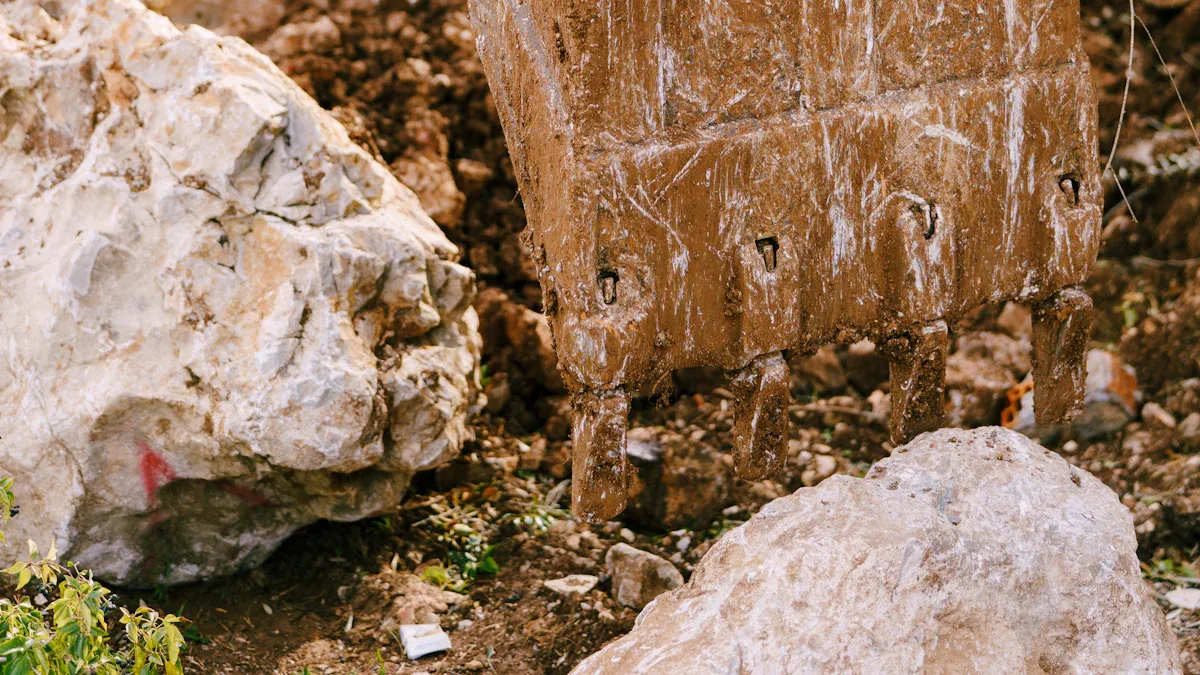
For 2025, I find that picking the right Bucket Tooth And Adapter is key for top performance. These tools are vital for heavy-duty jobs like mining, construction, and earthwork excavation. The market for ground engaging tools, including these, is set to grow by 4.3% annually from 2025-2034. Knowing how to select the best combination, perhaps a CAT K130 PENETRATION TIP 4707975, 220-9132 or a J700 Penetration Plus Tip 171-1709, means better efficiency and longer equipment life.
Key Takeaways
- Choosing the right bucket teeth and adapters is important. It helps your machines work better and last longer.
- Different jobs need different types of bucket teeth. Match the tooth type to the material you are digging.
- The adapter connects the tooth to the bucket. Pick the right adapter for strength or easy changes.
Essential Bucket Tooth And Adapter Types for 2025
Overview of Leading Bucket Tooth Profiles
When I look at the world of heavy equipment, I see how specialized bucket teeth have become. Each profile has a unique purpose, designed to tackle specific challenges on the job site. For 2025, I’ve noticed a few profiles really leading the way:
- V-Shaped Bucket: I find these perfect for cutting precise V-shaped trenches. They’re ideal for drainage work or laying cables and pipes with accuracy.
- Frost Bucket: When I face extremely hard or frozen ground, these are my go-to. They have extra teeth for serious ripping power.
- Micro Trenching Bucket: For those super narrow, deep cuts, like for fiber-optic cables, these buckets are just right.
- Skeleton Bucket: I love how these let me dig and screen at the same time. They separate big debris from finer materials effortlessly.
- Rake/Riddle Bucket: These are great for raking and sieving. I can separate debris while keeping the good soil.
- Cleanup/Clearing Bucket: For finishing a site, removing loose debris, or leveling surfaces, this multi-function bucket does it all.
Overview of Key Bucket Adapter Systems
Beyond the teeth themselves, the adapter system is super important. It’s what connects the tooth to the bucket, and I see different types offering various benefits. Some systems focus on quick changes, which saves me a lot of time on site. Others prioritize extreme durability for the toughest conditions. Choosing the right adapter means my teeth stay secure and perform their best, no matter the task.
Innovations in Ground Engaging Tools
What really excites me about ground engaging tools (GET) for 2025 are the innovations. Manufacturers aren’t just making things stronger; they’re making them smarter too. I’m seeing some amazing advancements:
- Carbide-tipped teeth and reinforced blades: These give me enhanced durability for breaking hard rock, which means better throughput and lower costs.
- Modular designs: I appreciate these because they make replacing GET super fast, cutting down on machine downtime.
- GPS-guided grading attachments: These really boost precision for grading, giving me a uniform surface and less rework.
- Heavy-duty, wear-resistant buckets: These last longer, so I don’t have to replace them as often.
- Automation and telematics: I’m seeing more remote monitoring of GET condition, which helps me plan maintenance better.
- Sensor-enabled GETs: These give me real-time wear data, helping me optimize replacement schedules and save money.
- Advanced Materials: They’re using high-strength alloys and composites now, making GET tougher and lighter. This improves performance and fuel efficiency.
- Smart GET with IoT Integration: Tools with sensors and connectivity give me real-time data on wear and usage. This helps me make informed decisions and prevent breakdowns.
- 3D Printing for Customization: This technology allows for specialized GET tailored to specific needs, boosting efficiency.
The right Bucket Tooth And Adapter combination, especially with these innovations, really makes a difference in my daily operations.
Essential Bucket Tooth Types and Their Applications
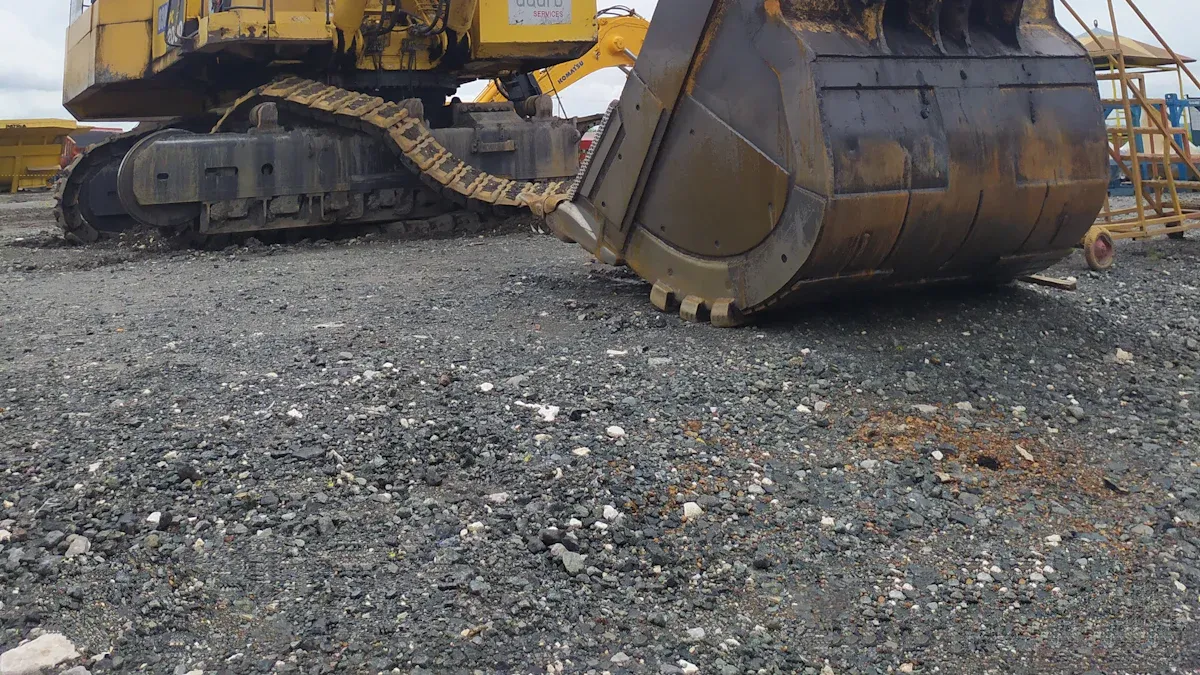
When I look at the different types of bucket teeth, I see how each one has a special job. Choosing the right tooth makes a huge difference in how well my machine works. Let me tell you about the essential types I rely on.
Standard Duty Bucket Teeth
I often reach for standard duty bucket teeth for my everyday tasks. These are my go-to for general digging. I find them perfect for working in moderate soil and loose soil. They handle clay really well too. I use them for general-purpose digging, clearing surfaces, scraping surfaces, and even cleaning up areas. When I’m doing general hauling with a skid steer or mini excavator, these teeth are a great fit. They also work well for leveling and trenching tasks in loosely compacted soil. I see them as a great fit for loaders, backhoes, and standard-duty excavators.
Heavy Duty Bucket Teeth
Sometimes, I face much tougher ground. That’s when I need heavy duty bucket teeth. These are built for challenging surfaces that need superior penetration. I use them in heavily compacted soil and rocky terrain. They are essential for higher stress environments like rock excavation and mining. When I’m dealing with hard compacted terrain or very rocky ground, these teeth really shine. They give me the strength and durability I need to get through the toughest materials.
Rock Chisel Bucket Teeth
For really hard and rocky ground, I turn to rock chisel bucket teeth. I find these teeth are cast from steel. This material sustains hardness for an extended wear life. They are designed to be durable for applications involving moderate impact and high abrasion. I notice their somewhat broad design. It tapers into a flat working edge. They frequently feature ribs for enhanced strength and improved penetration. These teeth have a symmetrical tooth point for effective penetration. They also have a center rib and extra wear material. This provides added strength for demanding applications. I appreciate their self-sharpening tips. These heavy tips maintain superior penetration as they wear. They attach to a square adapter nose for a stable foundation. I know the SmartFit™ system teeth show hardness ranging from 555 to 477 Brinell from surface to center. This ensures durability throughout. Their streamlined design improves bucket penetration. This reduces cycle times and fuel consumption. I recommend them for rocky terrain where good penetration is required. They are most effective in hard compacted or rocky terrain. I use them in medium-hard limestone, sandstone, cobblestones, boulders, and fractured rock formations.
Penetration Bucket Teeth
When I need to cut through tough, dense materials, I rely on penetration bucket teeth. These teeth have a sharp, pointed design. This design helps them slice into compacted earth, hardpan, and even some softer rock formations. I find they minimize resistance. This allows my machine to work more efficiently. They are excellent for breaking up stubborn ground. I use them when I need to get a good initial bite into difficult material. I use them to start a trench or dig into a hard bank with less effort.
Tiger and Twin Tiger Bucket Teeth
For specific, aggressive digging, I use tiger and twin tiger bucket teeth. I find Tiger Bucket Teeth, sometimes called single tiger, ideal for digging and trenching. I use them in rocky or tightly compacted terrain. They work great when I’m using a loader or skid steer. Twin Tiger Bucket Teeth are even more aggressive. I find them excellent for applications needing superior penetration. They excel in challenging surfaces like rock, hardpan, and frost. I typically use them with a loader. Their sharp, pointed design helps them rip through very tough ground.
Abrasion Resistant Bucket Teeth
Some jobs involve highly abrasive materials. Think sand, gravel, or certain types of rock. For these conditions, I need abrasion resistant bucket teeth. These teeth are specially made to withstand constant wear. I know hardfacing is a common and economical method to create wear-resistant coatings on these teeth. Manufacturers also use laser cladding technology to improve wear resistance. They often utilize Ni-based alloys in laser cladding for enhanced wear resistance. I’ve seen Ni60-WC composite coatings, especially those with higher WC content. These significantly improve wear resistance compared to the base material and hardfacing layers. These teeth last much longer in harsh, abrasive environments. They save me time and money on replacements.
Key Bucket Adapter Types and Their Functions
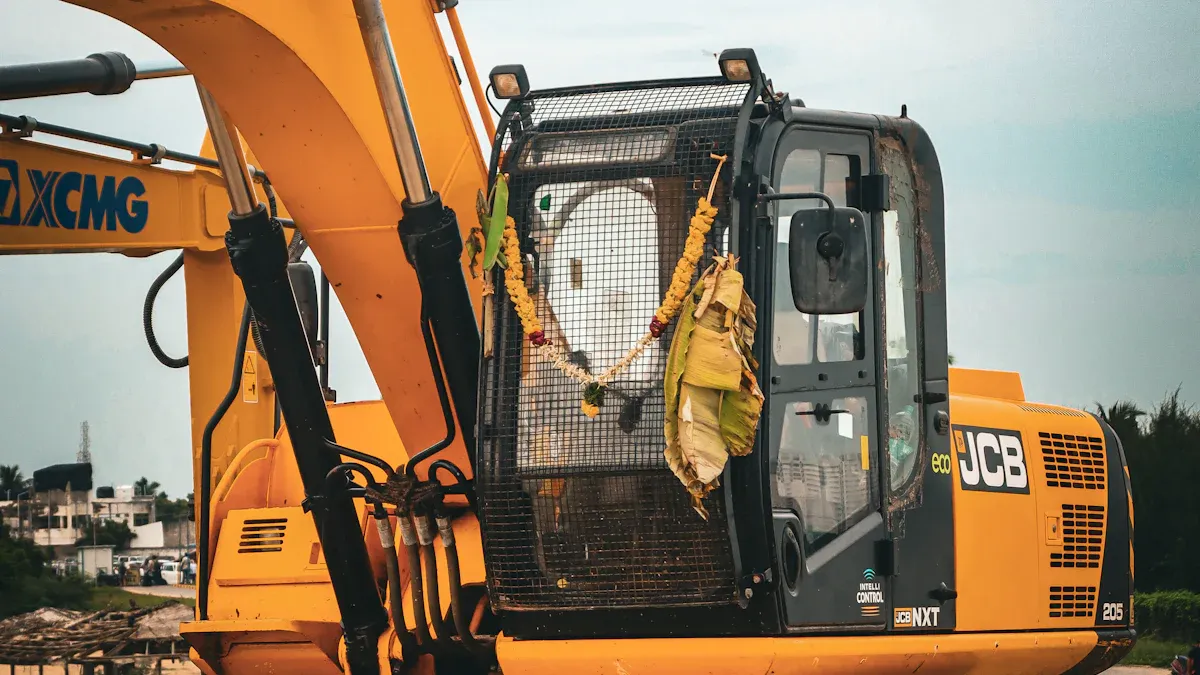
I know that choosing the right bucket adapter is just as important as picking the right tooth. Adapters are the crucial link. They connect the teeth to the bucket. Each type has a specific design. This design helps it perform best in certain situations. Let me walk you through the main types I use.
Weld-on Bucket Adapters
I often use weld-on bucket adapters for heavy-duty jobs. These adapters are permanently welded directly onto the bucket lip. This creates a very strong and secure connection. I find them preferred for medium to large excavators. They are also a top choice for quarry machines and mining equipment.
For general construction and excavation, I rely on weld-on shanks. They are standard for excavators and front-end loaders. I use them when digging in mixed materials like clay, soil, and gravel. They give me a solid anchor. This prevents teeth from loosening. This is crucial for tasks like trenching, footing excavation, and site grading. It helps me maintain consistent digging. It also minimizes downtime.
In the mining and quarrying industries, I heavily depend on weld-on shanks. They endure extreme abrasion and impact. They act as a sacrificial buffer. This protects the main bucket lip from damage. They absorb stress when breaking into rock piles and heavy materials. This maximizes my equipment uptime.
I also find them indispensable for specialized attachments. These are used in demanding environments. Think forestry mulchers in rocky soil. Or dredging buckets handling abrasive slurry. Also, demolition grapples piercing concrete. They are often part of customized lip assemblies. This allows me to tailor equipment for severe duty cycles. I can quickly swap worn teeth on a permanently welded shank. This is critical for maintaining productivity in extreme wear conditions.
These adapters offer strong wear resistance. They feature super coarse particles of alloy. This gives them good wear-proof qualities. They are made from selected high-strength alloy steel. This steel is heat-treated. They include an ultra-hard wear-resistant layer around the alloy. They also have eight alloy strips. This design offers a service life. It is 2 to 3 times longer than ordinary products.
Bolt-on Bucket Adapters
Sometimes, I need more flexibility. That is when I turn to bolt-on bucket adapters. These adapters attach to the bucket lip with bolts. This means I can remove and replace them easily. I find this very convenient. It is great for jobs where I might need to change my setup often. Or if I need to replace a damaged adapter quickly. They are a good choice for lighter to medium-duty applications. I use them when I want to avoid welding. They offer a secure fit. They also allow for quick maintenance.
Pin-on Bucket Adapters
Pin-on bucket adapters are another common type I use. These adapters attach to the bucket using a pin system. This allows for quick changes. I find them very efficient. They are popular on many different types of buckets.
I see them on heavy-duty buckets. For example, 610 mm, 762 mm, and 914 mm sizes often use them. High-capacity buckets also use pin-on adapters. These can be 457 mm, 610 mm, 762 mm, or 914 mm sizes. Some of these even come with weld-on adapters or bolt-on teeth. I also find them on soil excavation buckets. These come in sizes like 457 mm, 610 mm, 762 mm, and 914 mm. Standard duty buckets also use them. These are typically 305 mm, 457 mm, 610 mm, 762 mm, and 914 mm sizes. I have seen heavy-duty buckets, like a 914 mm (36 in) pin-on heavy-duty bucket, use weld-on adapters. A 762 mm (30 in) pin-on bucket also uses weld-on adapters. This shows their versatility.
Flush Mount Bucket Adapters
For certain tasks, I need a smooth bucket bottom. That is where flush mount bucket adapters come in handy. These adapters sit flush with the bottom of the bucket. This design helps prevent material from sticking. It also reduces wear on the bucket itself. I use them for finishing work. They are also great for grading. They help me achieve a clean, even surface. They minimize resistance when scraping. This makes my work more efficient.
Corner Bucket Adapters
Corner bucket adapters are specialized. I use them on the corners of my bucket. They provide extra protection. They also enhance penetration at these critical points. The corners of a bucket take a lot of abuse. These adapters reinforce those areas. They help extend the life of my bucket. They also improve digging performance. I find them especially useful in tough, abrasive conditions. They ensure my bucket maintains its shape and strength.
Selecting the Right Bucket Tooth And Adapter Combination
Matching to Machine Type and Size
I know the machine I use really changes what kind of bucket teeth and adapters I need. A tooth that works great on my excavator will look very different from one I use on a loader. The machine type tells me exactly what design and profile of bucket teeth and adapters I should pick.
Considering Material Being Excavated
The material I dig into also guides my choice. For general digging, I find high manganese steel teeth work well. They offer good toughness. When I face tougher ground, like hard rock, I prefer alloy steel or wear-resistant alloys. These have higher hardness. For the hardest jobs, like in rocky or abrasive conditions, I might even choose tungsten carbide. It gives me superior hardness and lasts the longest. Matching the right tooth material to the job saves me money and makes my equipment last longer.
Assessing Job Site Conditions
Job site conditions play a big role too. I know temperature and moisture can affect how fast my bucket teeth wear down. For example, penetration teeth work best in icy conditions or hard ground. I also remember that storing new bucket teeth at room temperature, around 20°C, helps them last. Keeping moisture below 60% also prevents problems.
Evaluating Wear Life and Maintenance Needs
I always look at the wear life of my bucket teeth. This tells me how long they will stay effective. Manufacturers often give me data on expected wear life. I also consider hardness and toughness. These properties directly impact how well the teeth resist wear and impact. I want teeth that last, so I don’t have to change them often.
Ensuring System Compatibility and Fit
Finally, I make sure everything fits together perfectly. I check the pin type and retainer size. They must secure the bucket tooth. I also measure the tooth pocket dimensions. The pocket needs to align with the adapter’s shape for a secure connection. I always look at the adapter’s design and consider wear. Regular inspections help me optimize lifespan. I also compare my measurements with supplier specifications. This ensures I have the right Bucket Tooth And Adapter combination.
I know selecting the right bucket tooth and adapter is critical for success. Incorrect choices lead to lost productivity, increased fuel use, and even catastrophic damage to my equipment. A loose fit, for example, causes rapid wear and potential failure. To maximize productivity, I always choose the correct tooth size and profile first, then match the adapter to my machine. I also ensure a reliable supply of matching teeth and maintain my components diligently. Adapting to new industry demands helps me extend equipment lifespan and keep operations running smoothly.
FAQ
What makes choosing the right bucket tooth so important for me?
I find the right tooth boosts my efficiency. It also extends my equipment’s life. It prevents costly downtime for me on the job.
What’s the main difference between weld-on and bolt-on adapters?
I weld on adapters for permanent strength. I bolt on adapters for easy changes. It really depends on my job’s specific needs.
How do I know when to replace my bucket teeth?
I check for significant wear. I also look for reduced penetration. Real-time data from smart GET helps me make that decision.
Post time: Dec-08-2025