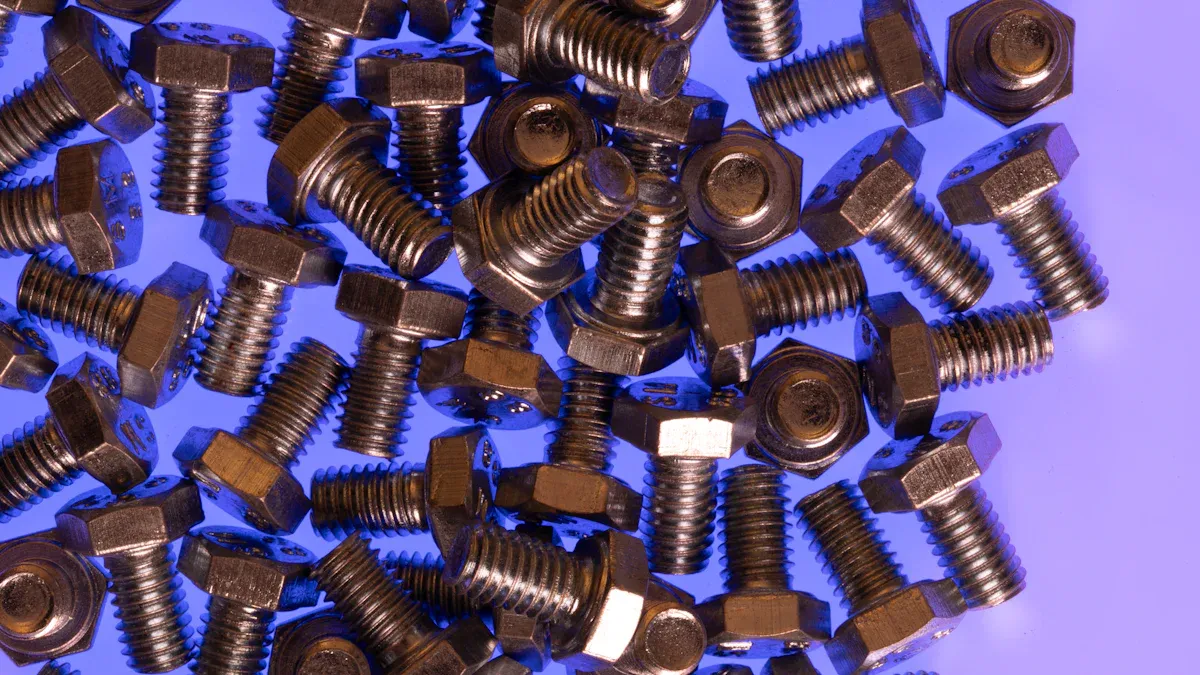
I often see people wondering if they can swap hardware between systems. Let me tell you, garage door track bolts and nuts are built for heavy, up-and-down movement. E-Track system Track Bolt And Nut, however, are made for holding cargo still in many directions. Their primary difference lies in how they handle loads and attach, making them totally unique.
Key Takeaways
- Garage door bolts handle constant up-and-down movement. E-Track bolts hold cargo still in many directions.
- Do not swap bolts between garage doors and E-Track systems. Each bolt type has a specific design for its job.
- Using the correct bolt prevents accidents. It keeps your garage door safe and your cargo secure.
Understanding Garage Door Track Bolts and Nuts
Design and Purpose for High-Cycle Vertical Loads
When I think about garage doors, I immediately picture the constant movement. My garage door opens and closes many times a day. This means the bolts holding the tracks need to handle a lot of stress. These bolts are not just any fasteners; they are specifically designed for dynamic, high-cycle vertical loads. They keep the heavy door moving smoothly up and down its tracks. The design ensures they can withstand repeated pulling and pushing forces without loosening or failing.
Materials and Durability for Weather Resistance
I also know that garage doors face the elements. Rain, snow, and humidity can all affect the hardware. That’s why the materials for these bolts are so important. Manufacturers choose materials that resist corrosion and last a long time.
- Galvanized steel bolts are a common choice. They offer good rust resistance and work well in most weather conditions.
- For homes near the ocean, stainless steel bolts are a better option. They provide superior corrosion resistance against salt air.
- Sometimes, you might see zinc-coated bolts. They give temporary rust protection, but I find they don’t hold up as long as galvanized or stainless steel in harsh conditions.
These material choices help ensure the durability of the entire system.
Typical Applications in Overhead Doors
You’ll find these specialized Track Bolt And Nut systems everywhere on overhead doors. They secure the vertical and horizontal track sections to the garage wall. They also attach the track brackets, which hold the tracks firmly in place. Every part of the garage door’s movement relies on these strong connections. They are crucial for the door’s safe and reliable operation.
Understanding E-Track System Track Bolts and Nuts
Design and Purpose for Versatile Cargo Securement
Now, let’s shift our focus to E-Track systems. I often see these in trailers and cargo vans. The bolts for these systems are quite different from what we use on garage doors. Their main job is to hold cargo securely in place. I use them for versatile cargo securement. These bolts allow me to create flexible tie-down points along an E-Track rail. This means I can secure items from many different directions. They don’t need to handle constant up-and-down motion. Instead, they prevent things from shifting or moving during transport. It’s all about providing static, multi-directional support for my valuable cargo.
Materials and Durability for Static Loads
When it comes to materials, E-Track bolts typically feature galvanized or zinc-plated steel. I find these materials are excellent for their intended purpose. They offer good resistance against rust in the common environments of trailers and trucks. Because they manage static loads, they don’t require the same level of fatigue resistance as bolts in dynamic systems. Their durability comes from preventing corrosion and maintaining a consistently strong grip. They just need to stay firmly in place and hold tight, ensuring my cargo remains secure.
Typical Applications in Cargo Management
I rely on E-Track systems extensively for effective cargo management. They are ideal for securing a wide range of items, like motorcycles, ATVs, or even large pieces of furniture in a moving truck. I simply snap a strap or a hook into the E-Track. Then, I tighten it down. You’ll commonly find these systems installed in enclosed trailers, open utility trailers, and cargo vans. They play a crucial role in making sure everything stays safe and secure during transit. Choosing the correct Track Bolt And Nut is essential for this. It gives me great peace of mind when I’m hauling important cargo.
Direct Comparison of Track Bolt And Nut Systems
I often see people wondering about the differences between these two systems. Let me tell you, when I compare garage door and E-Track systems, I see some really clear distinctions. They are designed for completely different jobs.
Load Type and Distribution: Dynamic vs. Static
I think about the forces each system handles. My garage door bolts deal with dynamic loads. This means constant movement, pulling, and pushing as the heavy door goes up and down. The weight shifts, and the bolts must withstand that repeated stress. They distribute these vertical, high-cycle forces across the track system.
On the other hand, E-Track bolts manage static loads. When I secure cargo in my trailer, I want it to stay put. These bolts hold things firmly in place, preventing movement in multiple directions. They are designed for steady, sustained pressure, not constant motion. The load distribution is about anchoring items against shifting, not guiding them through a cycle.
Attachment Methods and Compatibility
The way these bolts attach is a huge difference. I’ve learned that garage door track bolts have a special design. They feature a ‘rib neck‘ that keeps them from spinning once I put them into a drilled hole in the track. I then secure them with flange nuts, also known as ‘whiz nuts.’ These nuts are great because they act as both a washer and a lock washer. In older systems, I might have used a separate track bolt, a flat washer, a lock washer, and a standard nut.
For E-Track systems, the attachment methods are much more varied. I can attach E-Track rails using screws, rivets, or even by welding them. When I install them, I have several fastening options:
- A nut & bolt combo is often my choice for floor installations. It gives the strongest hold. I drill holes, put hex bolts through the track and surface, and then secure them with a washer and nut from underneath.
- Self-drilling tip screws are super handy for metal surfaces. I don’t need to pre-drill holes with these.
- For wood installations, I use wood screws. They have a wide washer head, which gives them excellent holding power. I often use these in alternating empty holes after placing the main bolts.
These distinct attachment methods show me why I can’t just swap them. They are built for their specific environments and functions.
Environmental Considerations and Corrosion Resistance
I also consider the environment each system lives in. My garage door is often exposed to the elements. Rain, snow, humidity, and temperature changes all affect the hardware. That’s why garage door bolts need strong corrosion resistance. I often see galvanized steel or even stainless steel used, especially in coastal areas. These materials help the bolts last through harsh weather.
E-Track systems, while sometimes exposed, are often inside enclosed trailers or vans. They still need good corrosion resistance, but perhaps not always to the same extreme as outdoor garage door hardware. Galvanized or zinc-plated steel is common here. They protect against rust in typical cargo environments. The key is that both need protection, but the specific type and degree of protection vary based on their exposure.
Safety Implications of Using the Right Track Bolt And Nut
For me, safety is always the top priority. Using the correct Track Bolt And Nut for its intended purpose is absolutely critical. If I tried to use an E-Track bolt on my garage door, it simply wouldn’t handle the dynamic, high-cycle loads. It could fail, causing the door to fall, which is incredibly dangerous. Imagine the damage or injury that could cause!
Conversely, using a garage door bolt in an E-Track system might not provide the multi-directional static hold needed for cargo. My cargo could shift, get damaged, or even break free during transport. This creates hazards on the road. I always make sure I use the right hardware. It ensures the structural integrity of the system and, most importantly, keeps everyone safe.
Why Interchangeability of Track Bolt And Nut is Not Recommended
I often see people wondering if they can just grab any bolt for a repair. But trust me, mixing up hardware between systems is a big mistake. These components are highly specialized.
Risk of Failure Due to Mismatched Load Capacities
I know it might seem tempting to use whatever bolt I have lying around. But using the wrong bolt can lead to serious problems. Garage door bolts handle constant, heavy movement. They are engineered for dynamic, high-cycle vertical loads. If I put an E-Track bolt, which is made for static loads, into a garage door track, it just won’t hold up. The repeated stress and vibration will quickly weaken it. This could lead to a catastrophic failure. The door could come crashing down. That’s a serious safety hazard. On the other hand, using a garage door bolt in an E-Track system might not give me the multi-directional grip I need for my cargo. It might not be designed to resist forces from all angles. This means my cargo could shift or break loose.
Compromising Structural Integrity and System Design
When I use the wrong bolts, I’m not just risking a single part. I’m compromising the entire system’s integrity. A garage door system is a finely tuned machine. Every component works together. When bolts securing garage door tracks loosen due to factors like vibration, thermal expansion, or neglect, the tracks lose their structural support. This loss of support allows the tracks to shift out of proper alignment, even slightly, which directly impacts the door’s travel path and the engagement of the rollers. This structural compromise can lead to various operational issues and safety hazards. I’ve seen how this can cause problems:
- Tracks might sag or bow outward.
- Connection points can misalign, throwing off the door’s balance.
- The motor works harder, which can lead to it failing too soon.
- Loose track brackets create gaps. Rollers can then derail, which is very dangerous.
- Rollers might struggle to stay engaged. This causes grinding, wobbling, or uneven opening and closing. Using the correct Track Bolt And Nut is essential. It keeps everything working as it should.
Warranty and Liability Concerns
I always think about the bigger picture. If I use parts not approved by the manufacturer, I immediately void my warranty. Most companies specify that their warranty is only valid with their approved hardware. If something goes wrong because I used the wrong bolt, the manufacturer won’t cover the repair or replacement. Even worse, if an accident happens and someone gets hurt, I could face serious liability issues. Insurance companies often look for proper installation and approved parts. Using mismatched hardware shows negligence. It’s just not worth the risk. I always stick to the recommended components to protect myself and others.
Key Differences in Track Bolt And Nut Specifications
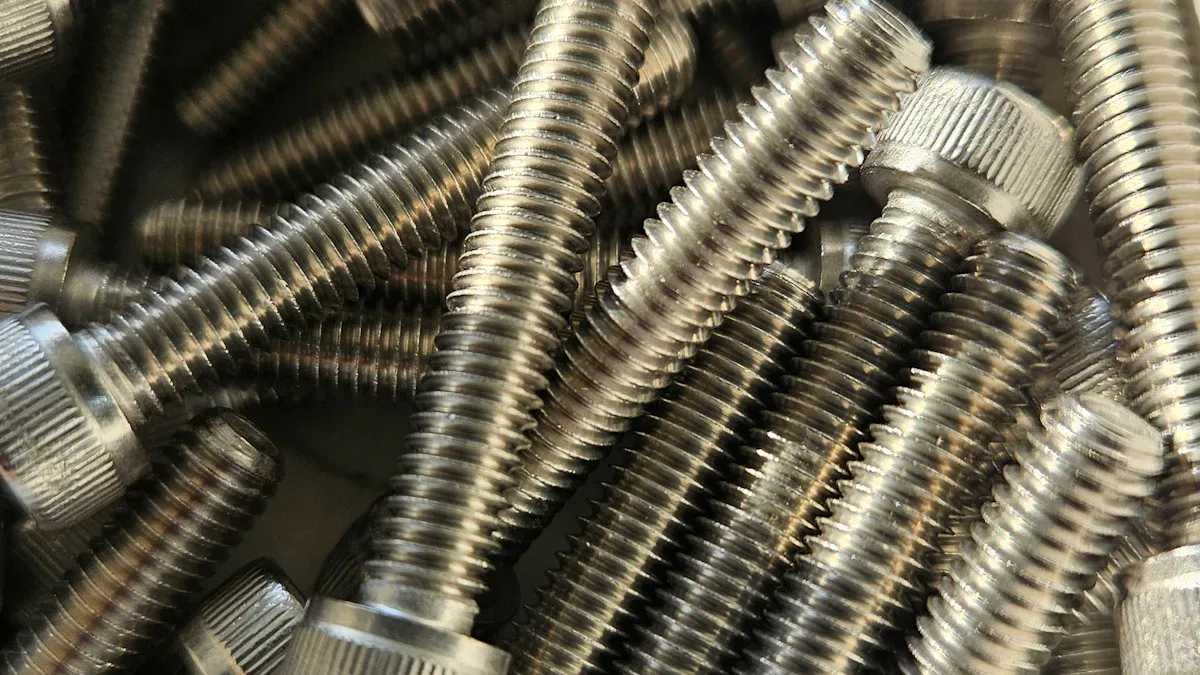
When I look at the specific details of these fasteners, I see even more reasons why they are not interchangeable. Their specifications tell a clear story about their intended use.
Common Sizes for Garage Door Track Bolts
For my garage door, I typically find specific sizes of bolts. These are usually carriage bolts with a square neck or a ribbed neck. This design keeps them from spinning when I tighten the nut. While I don’t have exact dimensions for every garage door bolt, they are generally robust enough to handle the door’s weight and constant movement. They need to fit snugly into the track’s pre-drilled holes.
Fastener Options for E-Track Systems
E-Track systems offer more variety in their fasteners. I often use different options depending on the surface. For metal surfaces, I might choose #12 or #14 screws. If I need a stronger hold, I go for 1/4″ bolts. I also find E-Track Self-Drilling Metal Screws very useful. They are 1/4 x 1-1/4 inch with self-drilling tips and a 3/8 inch hexagon socket head. This makes installation quicker. Here’s a quick look at some common options:
| Fastener Type | Diameter | Lengths Available |
|---|---|---|
| Through-Bolting Hex Bolt | 1/4″ | 1-1/2″, 2″ |
| Self-Drilling Hex Screw | N/A | 1-1/2″, 2″ |
| Wood Screw | N/A | 3/4″, 1-1/2″ |
Material Choices and Their Impact
The material of a Track Bolt And Nut really matters for its performance and lifespan. I see different types of steel used. Low Carbon Steel Zinc offers good corrosion resistance with its zinc coating. It works well for light to medium loads. Stainless Steel 18-8 gives excellent resistance to corrosion and oxidation. I use it in places exposed to water or chemicals. Stainless Steel A2 is similar, resisting corrosion and staining. For really harsh spots, like near the ocean, I choose Stainless Steel A4, which is marine grade. It has more nickel and molybdenum for enhanced resistance. Hot Dip Galvanized bolts also offer superior corrosion protection, especially in wet places.
I also need to be careful about mixing materials. If stainless steel and galvanized materials touch, I can get bimetallic corrosion. This happens if I have an anode metal (like zinc in galvanized steel), a cathode metal (stainless steel), an electrolyte (like rainwater), and a current path. The zinc coating protects the steel, but it can corrode away if it’s part of this reaction. To stop this, I often insulate the two metals.
Choosing the Correct Track Bolt And Nut for Your Needs
Specific Hardware Requirements for Garage Door Maintenance
When I work on my garage door, I know I can’t just grab any fastener. The hardware needs to be specific. I always make sure I use bolts designed for the dynamic, high-cycle loads of a garage door. These bolts often have a ribbed neck. This design keeps them from spinning when I tighten the nuts. Using the right bolts ensures my garage door operates smoothly and safely. It prevents unexpected failures that could be dangerous.
Ensuring Secure Cargo with E-Track Installation
For my E-Track system, securing cargo properly is key. I follow a specific method for installation. First, I lay the track where I want it. Then, I drill one hole using the track as a guide and insert a bolt to hold it. I move to the other end, drill a hole on the opposite side, and put in another bolt. With the track held at both ends, it becomes my template for the rest of the holes. I drill all four holes on each end and insert bolts to prevent any movement. After drilling all holes, I lift the track slightly, apply black silicone in each hole for sealing, and then lay the track back down. I use 1/4 inch drill bits and 1/4 inch bolts for this. This careful process ensures my cargo stays secure.
When to Consult Experts for Track Bolt And Nut Selection
Sometimes, I know I need to call in the professionals. For high-temperature applications, I always consult experts. They have the technical expertise to select suitable fasteners. If I need customized solutions for materials, sizes, or finishes, I also reach out to them. They help me meet specific challenges. Experts ensure my bolts and nuts meet international specifications like ASTM, ISO, or DIN, especially for high-temperature uses. When I deal with special applications, like those needing titanium alloy or nickel alloy, I definitely get their advice. They help me evaluate and select based on specific application requirements, environmental conditions, and demands. Choosing the correct Track Bolt And Nut is crucial for safety and performance.
I’ve shown you that garage door and E-Track systems use fundamentally different Track Bolt And Nut designs. They have distinct materials and applications. Understanding these differences is crucial for me. It ensures safety, proper function, and longevity in both my garage door operation and my cargo securement.
FAQ
Can I use garage door bolts in my E-Track system?
No, I cannot. Garage door bolts handle dynamic, vertical loads. E-Track bolts secure static cargo. They are not interchangeable. Using the wrong one risks failure. ⚠️
What are the risks if I use the wrong bolt for my garage door?
My garage door could fail. It might fall, causing serious damage or injury. I would also void my warranty. I always prioritize safety.
How do I choose the correct bolt for my E-Track installation?
I match the fastener to my surface. For metal, I use self-drilling screws or bolts. For wood, I use wood screws. Always ensure a secure fit.
Post time: Dec-08-2025