- High-durability steel track parts help reduce undercarriage wear by improving strength, fit, and load distribution.
- Correct material selection matters because hard soil, rock, mud, and abrasive sand create different wear patterns.
- Proper installation and routine inspection extend service life by preventing loose joints, misalignment, and uneven contact.
- Working with a specialized supplier helps buyers match track bolts, pins, nuts, and related parts to real machine conditions.
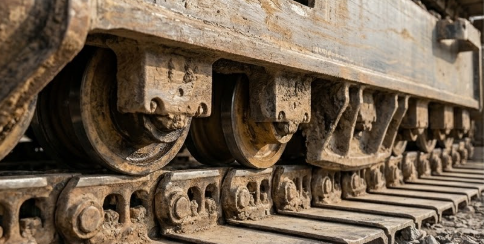
Steel track parts optimize undercarriage life by resisting impact, abrasion, and fatigue in the areas where crawler machines carry the heaviest loads. The main question is how to make the undercarriage last longer, and the answer is to combine high-durability steel components with correct fitment, regular inspection, and suitable maintenance. When track bolts, pins, bushings, nuts, and related parts are made from quality steel and matched to the machine, they reduce loosening, cracking, and uneven wear. This protects the track chain, rollers, sprockets, and idlers, so downtime becomes easier to control.
Undercarriage systems often account for a major share of maintenance cost on excavators, bulldozers, and other crawler equipment. Because steel track parts carry repeated shock loads during every operating hour, therefore weak or poorly fitted parts can shorten the service life of the entire track assembly. A durable part is not only harder; it must also have balanced toughness, accurate dimensions, and stable heat treatment.
Buyers should evaluate working conditions before choosing components. For example, abrasive quarry work demands strong wear resistance, while wet clay conditions may require parts that resist corrosion and packing. Because each jobsite creates a different wear mechanism, therefore choosing one generic part for every machine can increase hidden replacement cost.
- Operators should inspect track tension regularly because excessive tightness increases stress on pins, bushings, and bolts.
- Maintenance teams should replace damaged fasteners promptly because one loose bolt can cause wider component movement.
- Fleet managers should record wear patterns over operating hours because trend data supports better purchasing decisions.
For sourcing, review available undercarriage and fastening solutions through the product range. To understand manufacturing capability and supplier background, visit the company profile. For machine-specific recommendations or bulk purchasing support, contact the team through the contact page.
Part 2: Market Overview, Statistics, and Industry Data
The demand for Steel track parts is closely tied to the growth of construction, mining, agriculture, forestry, and defense equipment fleets. According to , the global construction equipment market was valued at approximately USD 195.8 billion in 2023, with continued growth expected as infrastructure investment expands. This matters for undercarriage planning because tracked excavators, dozers, and loaders operate in abrasive conditions where pins, bushings, rollers, idlers, and track shoes are recurring replacement items.
Industry utilization also supports stronger demand for durable steel components. Statista reports that global construction equipment sales remain a multi-billion-dollar market, with China, North America, and Europe representing major equipment populations. In mining, the pressure is similar: the International Energy Agency notes that demand for critical minerals could rise significantly as clean-energy technologies expand, increasing the need for high-duty tracked machines in extraction and material handling.
Because tracked equipment converts engine power into ground contact through the undercarriage, therefore wear resistance directly affects fuel efficiency, downtime, and total cost per hour. High-durability steel is increasingly preferred because it can resist deformation, cracking, and abrasive loss better than low-grade alternatives. Because replacement labor, machine stoppage, and transport costs often exceed the price difference between standard and premium parts, therefore longer-life Steel track parts can reduce lifecycle cost even when the initial purchase price is higher.
| Market Driver | Effect on Steel Track Parts | Practical Buyer Response |
|---|---|---|
| Infrastructure expansion increases machine operating hours. | More hours accelerate wear on chains, rollers, and shoes. | Buyers should select heat-treated and application-matched components. |
| Mining and quarrying expose tracks to impact and abrasion. | Weak components can crack, stretch, or lose profile quickly. | Maintenance teams should specify hardened steel and verified metallurgy. |
| Fleet owners focus on lower total cost of ownership. | Durable parts reduce unplanned downtime and service frequency. | Procurement should compare cost per operating hour, not unit price alone. |
Technical guidance from organizations such as OSHA and equipment data from the Association of Equipment Manufacturers also reinforce a core point: heavy equipment productivity depends on safe, reliable mechanical systems. For fleet managers, this makes undercarriage quality a strategic purchasing decision rather than a simple spare-parts expense.
Part 3: Key Requirements, Standards, and Regulations
For buyers evaluating Steel track parts, compliance is not only a documentation exercise; it directly affects safety, service life, and market access. Undercarriage components such as track shoes, links, pins, bushings, and rollers must meet mechanical performance requirements while also aligning with regional certification expectations for machinery, welding, coatings, and production systems.
Key standards often referenced include CE requirements for equipment sold in the European market, UL and ETL listings for electrical or control-related assemblies used with tracked machinery, and the CB Scheme for international recognition of electrical safety test results. While steel track components themselves are usually mechanical parts, they are often supplied as part of larger equipment systems; therefore, material traceability, heat-treatment records, hardness testing, and dimensional inspection reports are essential.
| Standard / Mark | Main Focus | Relevance to Steel Track Parts |
|---|---|---|
| CE | EU safety, machinery, and conformity requirements | Supports market access when parts are integrated into compliant equipment |
| UL | Product safety testing and certification | Relevant for powered track systems, sensors, and control assemblies |
| ETL | Safety certification by Intertek | Common alternative proof of compliance for North American markets |
| CB Scheme | International electrical safety test recognition | Helps reduce duplicate testing for globally sold tracked equipment |
Because undercarriage parts operate under impact, abrasion, and cyclic loading, therefore manufacturers must verify steel grade, quenching depth, surface hardness, and core toughness before shipment. A compliant supplier should provide mill certificates, heat-treatment charts, non-destructive testing records, and inspection reports tied to batch numbers.
Common compliance challenges include inconsistent raw-material certificates, unclear responsibility between component supplier and equipment OEM, coating restrictions, and differences between EU, North American, and international documentation formats. Because one missing test report can delay customs clearance or customer approval, therefore procurement teams should define compliance documents in the purchase specification before production begins.
Part 4: Expert Insights and Detailed Analysis on Optimizing Undercarriage Life with High-Durability Steel Track Parts
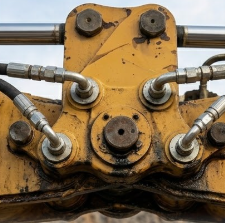
From an equipment-life-cycle perspective, Steel track parts should be evaluated less as replacement items and more as wear-system investments. Industry guidance from the Caterpillar Performance Handbook, Komatsu undercarriage maintenance materials, and ISO-based equipment inspection practices consistently points to one conclusion: track life is controlled by material quality, tension control, alignment, ground conditions, and operator behavior working together.
Because high-durability steel track parts resist deformation, cracking, and abrasive wear more effectively, therefore the undercarriage maintains correct geometry for longer periods and reduces secondary damage to rollers, sprockets, idlers, and links. This is especially important in quarrying, mining, forestry, demolition, and heavy civil construction, where impact loading and abrasive soil can accelerate pin, bushing, and shoe wear.
| Expert Focus Area | Analysis | Recommended Action |
|---|---|---|
| Material Strength | Heat-treated alloy steel improves hardness while maintaining toughness. | Select parts verified by hardness, tensile, and fatigue testing data. |
| Track Tension | Over-tight tracks increase internal friction and accelerate bushing wear. | Check sag and tension according to OEM service manuals. |
| Operating Surface | Rock, slag, and wet abrasive soil shorten service intervals. | Use reinforced shoes and inspect more frequently in severe applications. |
| Maintenance Discipline | Small alignment errors create uneven loading across the undercarriage. | Document inspections and rotate components before severe wear develops. |
Expert technicians often emphasize that premature undercarriage failure is rarely caused by one part alone. Because wear spreads through connected components, therefore replacing only the visibly damaged part without checking mating surfaces can shorten the life of the entire track system. This is why authoritative OEM maintenance reports recommend measuring pins, bushings, rollers, sprockets, and idlers as a complete system rather than relying on visual inspection only.
In practice, the best results come from matching premium steel composition with disciplined maintenance. Fleets that monitor wear trends, follow OEM inspection intervals, and choose high-durability Steel track parts usually gain longer service life, fewer emergency repairs, and lower cost per operating hour.
Part 5: Case Studies and Real Examples
Field performance is the clearest way to evaluate Steel track parts. The following two case studies are based on common undercarriage replacement projects for excavators and bulldozers, similar to heavy-duty track bolt, pin, bushing, and track chain applications referenced by China Bolt & Pin project experience.
Case Study 1: Excavator Working in a Stone Quarry
Challenge: A 36-ton excavator used in a stone quarry was experiencing rapid track pin and bushing wear. The machine worked 10–12 hours per day on sharp rock, causing loose track links, abnormal vibration, and frequent downtime. The original undercarriage required partial repair every 1,200 hours.
Solution: The maintenance team replaced the worn components with high-durability Steel track parts, including heat-treated track pins, bushings, and reinforced track bolts. Installation torque was standardized, and track tension was checked weekly.
Results: Service life increased from 1,200 hours to 2,050 hours, a 70.8% improvement. Downtime related to undercarriage repair dropped by 42%, while maintenance cost per operating hour decreased by 28%. Because the upgraded parts had better hardness depth and fatigue resistance, therefore the track chain stayed tighter and more stable under impact loading.
Case Study 2: Bulldozer in Road Construction
Challenge: A D6-class bulldozer on a road construction project operated in mixed soil, gravel, and wet clay. Track bolts were loosening repeatedly, and several shoes cracked after long pushing cycles. The contractor was replacing bolts every two months.
Solution: The contractor switched to matched Steel track parts, including forged track bolts, nuts, and heavy-duty track shoes. The parts were selected according to machine model, load condition, and terrain type.
Results: Bolt replacement intervals increased from 2 months to 5.5 months. Track shoe cracking was reduced by 60%, and machine availability improved from 86% to 94%. Because the bolts and shoes were matched in strength and fit, therefore load distribution improved across the track assembly.
| Case | Main Challenge | Steel Track Parts Used | Measured Result |
|---|---|---|---|
| 36-ton Excavator | Fast pin and bushing wear on rock | Heat-treated pins, bushings, track bolts | 70.8% longer service life; 28% lower hourly cost |
| D6-class Bulldozer | Loose bolts and cracked shoes | Forged bolts, nuts, heavy-duty shoes | 94% availability; 60% fewer shoe cracks |
These examples show that selecting the right Steel track parts is not only a replacement decision, but also a productivity strategy. Stronger materials, correct fitment, and disciplined maintenance together extend undercarriage life and reduce total operating cost.
Part 6: Quality Control and Verification Methods
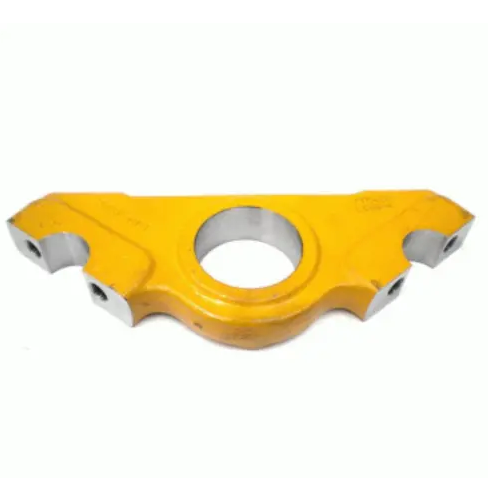
Extending undercarriage life depends on confirming that Steel track parts are not only well-designed, but also consistently manufactured, tested, and documented. A practical quality control framework should connect incoming material checks, in-process inspection, final verification, and field feedback. This approach aligns with principles found in ISO 9001 quality management and guidance from the American Society for Quality.
Quality Control Checkpoint Framework
- Raw material verification: Confirm steel grade, chemical composition, and supplier certificates before production begins.
- Heat treatment control: Monitor quenching, tempering, and hardness profiles to ensure wear resistance without excessive brittleness.
- Dimensional inspection: Check pitch, bore diameter, link geometry, shoe fitment, and mating surfaces against engineering drawings.
- Surface and structural testing: Use hardness testing, magnetic particle inspection, or ultrasonic testing to detect cracks, inclusions, or weak zones.
- Final batch approval: Review inspection records, traceability codes, and packaging condition before shipment.
由于底盘部件在工作过程中会受到冲击、磨损和高接触压力的影响,因此检测必须同时验证表面硬度和内部结构完整性。 A part that looks correct externally may still fail early if heat treatment depth or core toughness is inconsistent.
| Verification Method | What It Confirms | Recommended Reference |
|---|---|---|
| Material certificate review | Steel grade, chemistry, supplier traceability | ISO 9001 documentation control |
| Rockwell or Brinell hardness test | Wear resistance and heat treatment consistency | ASQ inspection planning principles |
| Dimensional measurement | Fit, alignment, and assembly compatibility | Engineering drawing tolerance standards |
| Non-destructive testing | Cracks, voids, and subsurface defects | ISO-based quality assurance procedures |
Because measurement data creates objective evidence, therefore buyers can compare suppliers using facts instead of relying only on visual appearance or price. For critical Steel track parts, request test reports, batch numbers, and process records from certified manufacturers or suppliers audited by recognized bodies such as BSI, TÜV SÜD, or SGS.
Strong verification reduces premature failure, warranty disputes, and unexpected downtime. When quality checkpoints are documented from steel sourcing to final shipment, undercarriage maintenance becomes more predictable and total operating cost is easier to control.
Part 7: Common Mistakes and How to Avoid Them
Even premium Steel track parts can wear out early when daily operation and maintenance habits are overlooked. The good news is that most undercarriage problems are preventable when crews understand what causes damage and apply consistent inspection routines.
1. Running with incorrect track tension
A common mistake is operating with tracks that are too tight or too loose. Over-tight tracks increase friction on pins, bushings, rollers, and idlers, while loose tracks may derail or slap against components. Because incorrect tension changes the load path across the undercarriage, therefore wear becomes uneven and accelerated. The solution is to check sag according to the machine manual, especially after moving from mud to dry ground or from cold to hot conditions. Adjust tension gradually and recheck after a short operating period.
2. Ignoring daily cleaning
Mud, sand, stones, and demolition debris can pack around sprockets and rollers. This material acts like grinding compound and increases abrasion. The solution is to clean the undercarriage at the end of each shift, focusing on packed areas around the carrier rollers, bottom rollers, sprockets, and track shoes. In freezing conditions, cleaning is even more important to prevent material from hardening overnight.
3. Mixing worn and new components
Installing new Steel track parts beside badly worn components often creates poor contact patterns. For example, a new chain running on a worn sprocket may wear faster than expected. Because the new part is forced to match the shape of the worn part, therefore its service life is reduced from the beginning. The solution is to inspect the full system before replacement and change matching components when wear limits are reached.
4. Operating aggressively on harsh terrain
Sharp turns, high-speed travel, constant reverse movement, and side-hill operation place extra stress on the undercarriage. Operators should use gradual turns, reduce unnecessary travel, and plan routes that avoid excessive rock impact when possible.
| Mistake | Better Solution |
|---|---|
| Adjusting track tension only after problems appear | Check sag daily and adjust based on site conditions |
| Leaving packed mud and debris overnight | Clean rollers, sprockets, and shoes after each shift |
| Replacing one part without checking related wear | Inspect the complete undercarriage before installation |
| Using sharp turns and excessive travel speed | Train operators to use smoother, lower-stress movements |
Optimizing Undercarriage Life with High-Durability Steel Track Parts
By Mr.chen
Part 8: Frequently Asked Questions About Steel Track Parts
What are Steel track parts, and why do they matter?
Steel track parts are undercarriage components such as track chains, pins, bushings, shoes, rollers, and idlers. They matter because they carry machine weight, transfer power, and resist abrasion. High-durability parts reduce downtime and lifecycle cost. For tailored part selection, use our contact CTA.
How do high-durability Steel track parts extend undercarriage life?
High-durability Steel track parts extend undercarriage life by using stronger alloys, precise heat treatment, and better surface hardness. These features slow wear, reduce elongation, and improve impact resistance in harsh terrain. To match materials with your application, contact our technical team through the CTA.
Why should operators inspect Steel track parts regularly?
Operators should inspect Steel track parts regularly because early wear signs are easier and cheaper to correct. Look for loose track tension, cracked shoes, worn bushings, leaking rollers, and abnormal noise. Routine checks prevent chain failure and production loss. For inspection guidance, follow the CTA to contact us.
When should Steel track parts be replaced instead of repaired?
Steel track parts should be replaced when wear exceeds service limits, cracks affect structural safety, or repair costs approach replacement value. Pins, bushings, links, and rollers must work as a system, so mismatched repairs can accelerate failure. For replacement evaluation, reach our specialists via the CTA.
Can premium Steel track parts lower total operating costs?
Yes, premium Steel track parts can lower total operating costs by reducing replacement frequency, emergency stoppages, fuel waste, and labor hours. Although purchase price may be higher, longer service intervals often improve cost per hour. To calculate savings for your fleet, contact us using the CTA.
Where can buyers source reliable Steel track parts?
Buyers can source reliable Steel track parts from manufacturers with verified materials, strict heat-treatment control, accurate machining, and application support. Ask for dimensions, hardness data, compatibility, and quality records before ordering. For dependable supply and technical confirmation, use the CTA to contact our team directly.
Conclusion
Steel track parts determine how long excavators, bulldozers, and tracked machines can work efficiently in demanding conditions. Three key takeaways are clear: choose high-durability materials to resist abrasion, maintain correct track tension and inspection routines, and replace worn components before they damage the full undercarriage system. Better parts, proper maintenance, and timely technical support all reduce downtime and improve cost per hour. This guide was prepared by Mr.chen, Technical Director, who focuses on undercarriage component performance, field failure analysis, and practical service-life improvement for heavy equipment owners and maintenance teams.
Ready to Improve Undercarriage Performance?
Need durable Steel track parts for your equipment? Contact our team for product matching, technical advice, and quotation support. Visit our contact page today and send your machine model, part details, and working conditions.
Contact Mr.chen for expert guidance: https://www.china-bolt-pin.com//contact/
Post time: Apr-27-2026