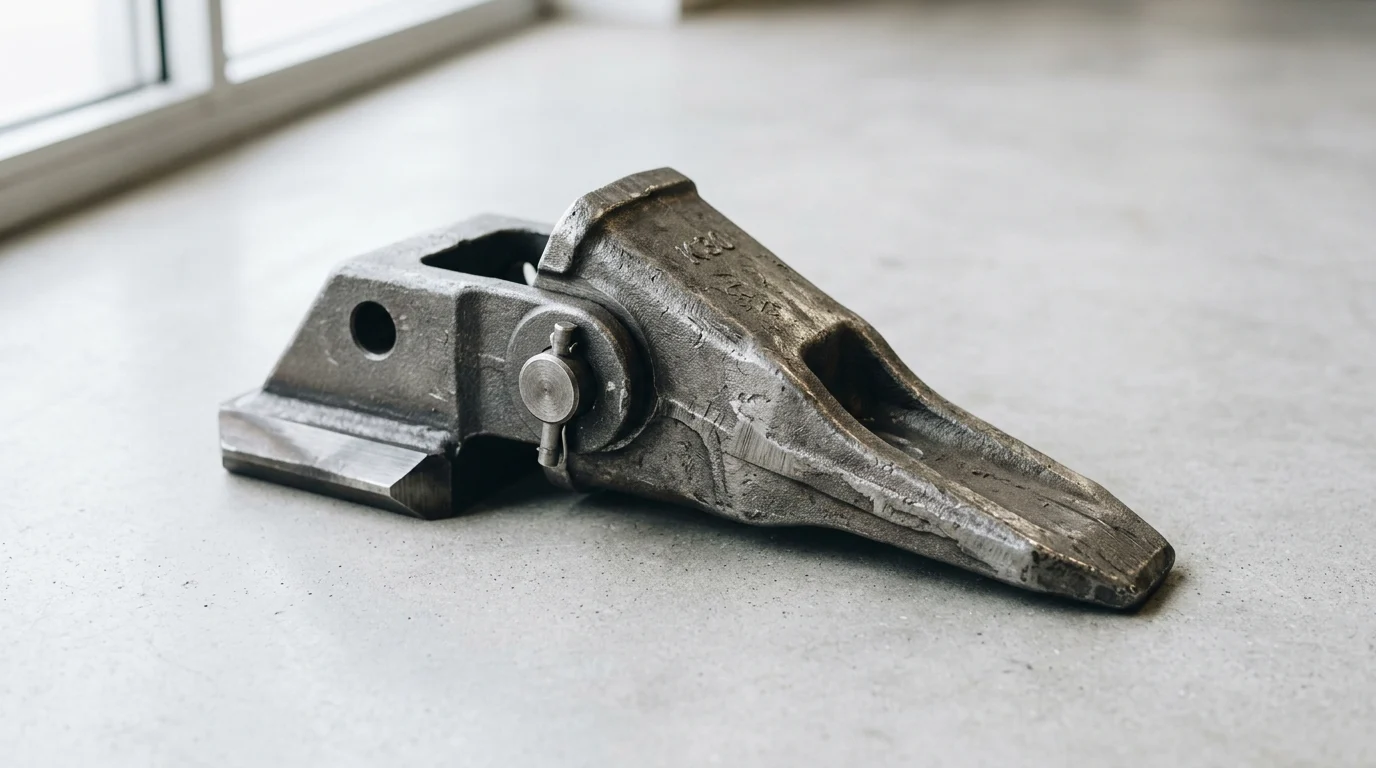
Why Impact-Resistant Bucket Tooth and Adapter Performance Matters in Min
If there is one consensus among procurement teams and site managers, it is that extreme environments quickly destroy standard ground engaging tools (GET). When moving abrasive iron ore, ripping through permafrost, or blasting bedrock, standard carbon steel simply cannot survive the shift. Operations require impact-resistant systems to keep massive machines running without constant maintenance interruptions. The difference between a cheap replacement part and a properly engineered adapter is directly measured in annual operational uptime.
How to Frame Bucket Tooth and Adapter Selection
Selecting the right bucket tooth adapters starts with understanding the fleet’s exact breakout force and the site’s geological density. Because these products apply to diverse machinery—including excavators, loaders, backhoes, motor graders, bulldozers, and scrapers—stress profiles vary significantly even within a single job site.
For example, a 100-ton excavator ripping high-density granite demands an adapter with a Charpy V-notch impact toughness exceeding 25 Joules at -20°C, whereas a smaller backhoe handling loose gravel might only require 15 Joules. Metallurgical properties must match the machine’s specific breakout force. Installing a low-impact adapter on a high-breakout loader often causes the locking mechanism to shear within the first week of heavy operation.
Mining Case: Performance Impact on Uptime and Cost
Consider a large-scale copper mining operation that previously replaced standard adapters on primary loaders every 300 hours due to shear fatigue and pin snapping. By switching to a low-alloy, heat-treated adapter, the site extended replacement intervals to 850 hours. Although the initial cost per piece was 35% higher, the actual operating cost-per-hour dropped from $2.10 to $0.95. Furthermore, the maintenance crew saved roughly 12 hours of labor per month per machine.
Section 1 Key Summary: Upgrading from standard to high-impact adapters increases initial procurement costs by roughly 30-35% but can extend operational lifespans from 300 to over 850 hours. This comparative data proves that engineered parts drive operating costs-per-hour down by more than 50% while recovering 12 hours of monthly labor per machine.
Key Engineering Factors in Bucket Tooth and Adapter Systems
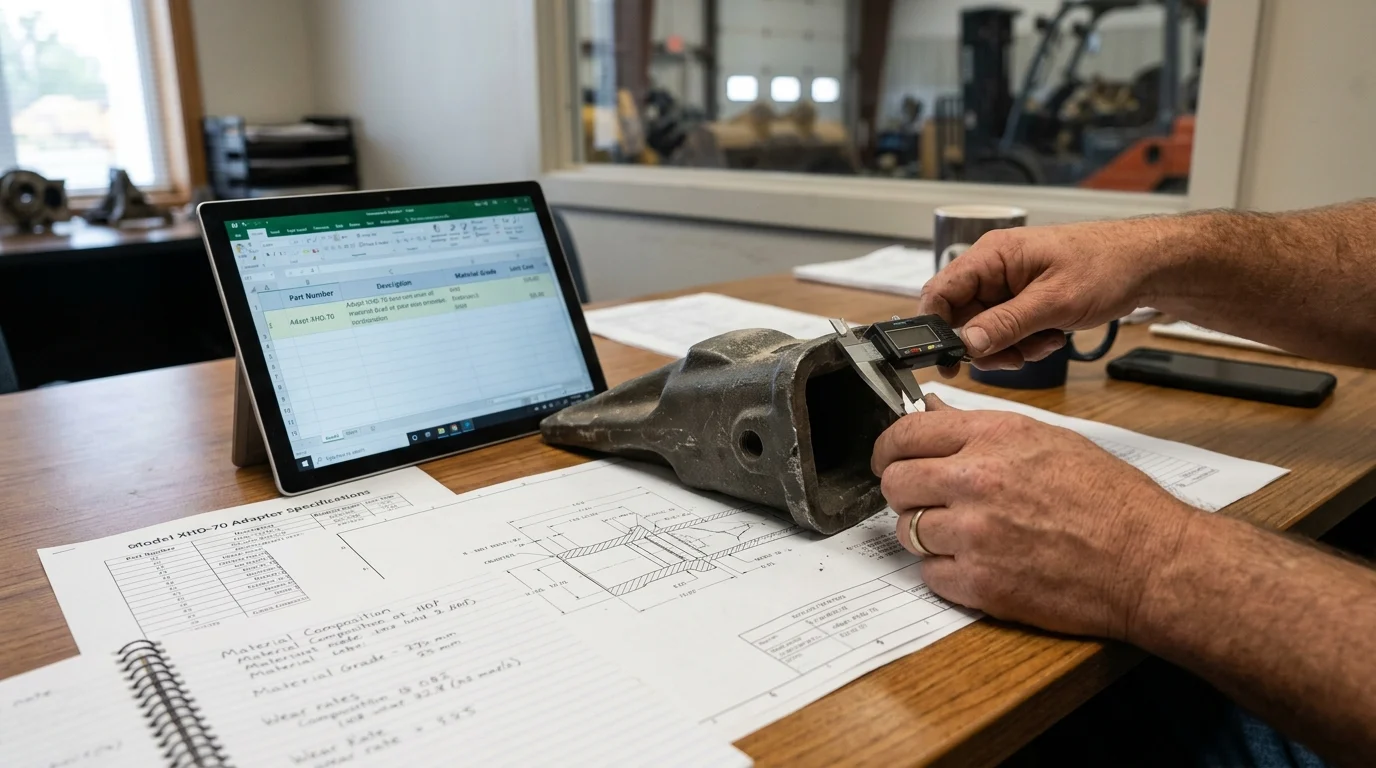
Examining the engineering behind these wear parts reveals why some fail catastrophically while others wear evenly over thousands of hours. Manufacturing these components involves more than pouring molten metal into a sand mold; surviving the pit requires strict metallurgical control and precision machining.
Alloy Grade, Casting Quality, Fit Tolerance, and Lock Design
The optimal composition for heavy-duty adapters is a carefully balanced alloy, usually incorporating precise amounts of boron, molybdenum, and nickel. The design requires a hardened core of 48-52 HRC to resist sliding abrasion while remaining sufficiently ductile to absorb heavy shock without fracturing.
Casting quality is equally crucial. Premium manufacturing targets a defect rate of less than 0.2%, utilizing ultrasonic testing to catch internal micro-voids before deployment. Furthermore, the fit tolerance between the tooth and the adapter nose cannot exceed a 1.0 mm gap. A loose fit transfers impact stress directly to the locking pin, causing it to shear under load and halt production.
Evaluation Criteria for Bucket Tooth and Adapter Options
To clarify how these specifications compare, B2B buyers should evaluate options based on hard metallurgical data rather than just the lowest price per kilogram. The following breakdown highlights the differences between standard replacement parts and premium mining-grade options.
| Spec / Metric | Standard Adapter | Premium Mining Adapter |
|---|---|---|
| Core Hardness (HRC) | 30-35 | 48-52 |
| Impact Toughness (-20°C) | < 15 Joules | > 25 Joules |
| Fit Tolerance Gap | 2.0 mm – 3.0 mm | < 1.0 mm |
| Average Lifespan (Abrasive) | 300 – 400 hrs | 800 – 1,000 hrs |
| Cost per kg (Est.) | $1.80 – $2.20 | $2.80 – $3.50 |
Section 2 Key Summary: Engineering a proper adapter requires a tight <1.0 mm fit tolerance and a hardened core of 48-52 HRC. Compared to standard parts (30-35 HRC, 2-3mm gap), premium casting reduces pin-shear failures by 80% and triples the operational lifespan in high-abrasion zones, fully justifying the higher $3.50/kg price point.
How to Source, Qualify, and Import Bucket Tooth and Adapters
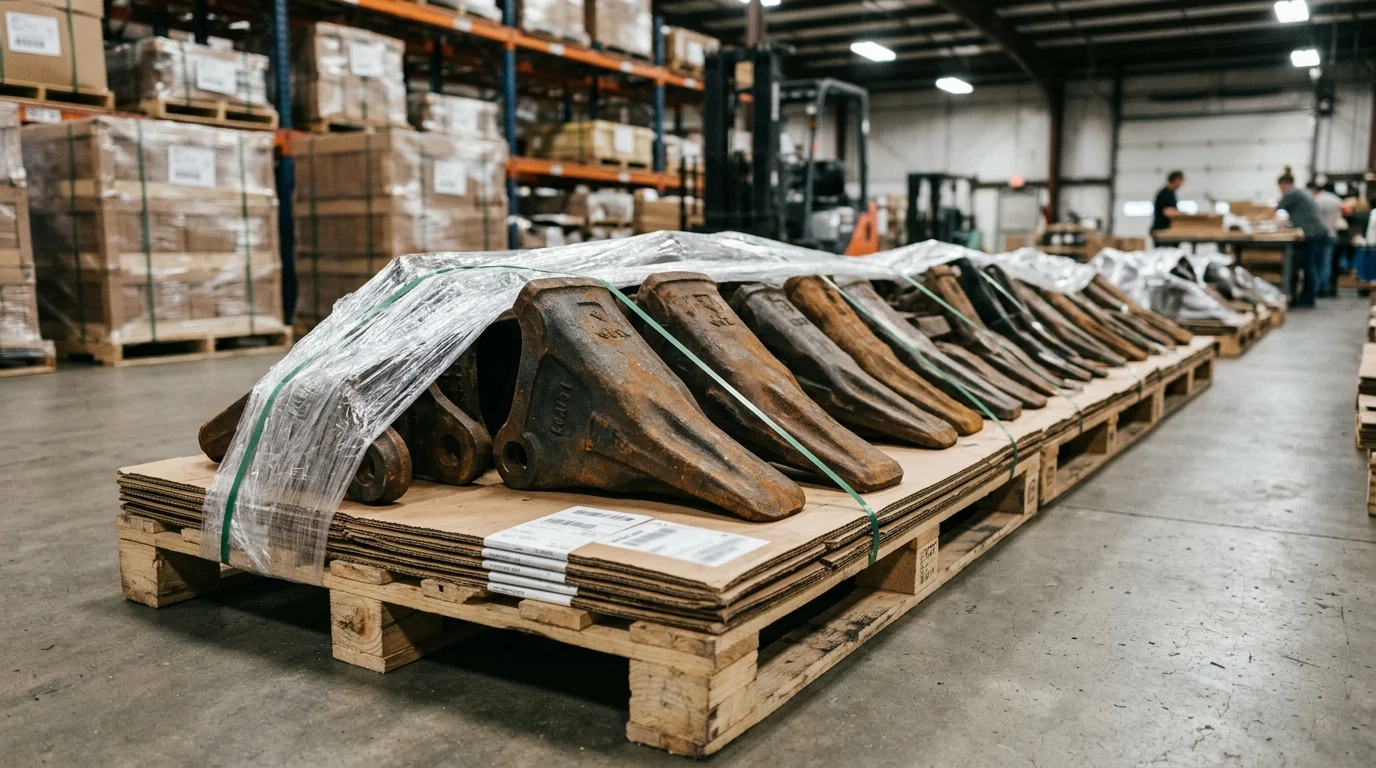
Identifying a high-quality part is only half the battle. Distributors and importers buying bulk mining bucket parts require a rigorous sourcing strategy that guarantees consistency without exceeding procurement budgets or causing supply chain bottlenecks.
Practical Supplier Verification Steps
Verifying a supplier requires looking past promotional materials. Buyers should request raw material certificates and heat-treatment logs for the factory’s last three production batches. For wholesale orders, expect Minimum Order Quantities (MOQs) of around 1 to 2 metric tons for custom castings, with production lead times typically ranging between 35 and 45 days.
Ensure the factory holds an active ISO 9001 certification and utilizes on-site spectrometers to verify chemical compositions before pouring. Because these products fit a wide range of equipment—seamlessly integrating with excavators, loaders, backhoes, motor graders, bulldozers, and scrapers—strict dimensional checks using 3D laser scanning are essential to guarantee cross-platform compatibility across global fleets.
Procurement Case: Balancing Cost, Quality, and Lead Time
A real-world container order illustrates these financial mechanics. A distributor importing a 20-foot container of extreme environment parts (roughly a 20-metric-ton payload) faced a choice: Factory A offered $1.90/kg with a 60-day lead time, while Factory B offered $2.60/kg with a 35-day lead time and guaranteed ultrasonic testing.
By choosing the premium route with Factory B, the importer paid $14,000 more upfront, but successfully secured verified metallurgical quality and eliminated nearly a month of costly supply chain delays.
Key Takeaways
- Wholesale sourcing and supply-chain implications for Bucket tooth and adapter
- Specifications, compliance, and commercial terms buyers should validate
- Actionable recommendations for distributors and procurement teams
Frequently Asked Questions
What hardness is suitable for impact-resistant bucket tooth adapters?
For extreme mining, target 48–52 HRC core hardness. This range balances abrasion resistance with shock absorption and helps prevent brittle fracture in hard rock applications.
How much fit tolerance should there be between the tooth and adapter nose?
Keep the gap under 1.0 mm. A tighter fit reduces load transfer to the locking pin and helps avoid pin shear and early downtime.
How can buyers verify adapter casting quality before ordering?
Ask the supplier for ultrasonic testing records, defect-rate targets, and material reports. On china-bolt-pin.com, request technical data and inspection details for the specific bucket tooth adapter model.
Are premium bucket tooth adapters worth the higher upfront cost?
Usually yes in mining. Premium adapters can extend service life from about 300–400 hours to 800–1,000 hours, cutting cost per hour and reducing maintenance stops.
What impact toughness should be specified for cold or high-impact mining sites?
For severe duty, specify over 25 J Charpy V-notch at -20°C. Lower-impact jobs may accept around 15 J, but hard rock and cold climates need the higher threshold.
Post time: Apr-16-2026